
This light armored half-track saw service from early 1941 to the end of the War.

Join me for a brief look at this German fighting vehicle. Continue reading
This light armored half-track saw service from early 1941 to the end of the War.
Join me for a brief look at this German fighting vehicle. Continue reading
In the last year or so of World War II camouflage was not really a big concern for Allied forces any longer. That, combined with more time and resources led to many young men going to extreme lengths with the decoration of their war machines.
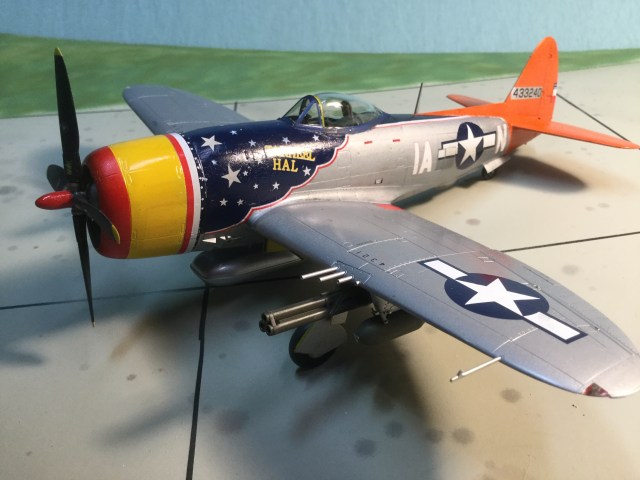
Join me for a look at one spectacular example from late in the European War. Continue reading
In some ways this book is tangential to the military history I usually read. Yet the epic of World War II influenced, shaped or ruined people from all walks of life. In that sense it isn’t too far afield to talk about one of the great theologians of the 20th Century who lived through most of the Nazi era in Germany.
Join me for a brief look at a fascinating biography. Continue reading
So far on this site I’ve posted less than a dozen book reviews, yet I find myself now revisiting the Pearl Harbor raid. No doubt this is an important and complicated event!
Join with me for a second look at this pivotal battle. Continue reading
Although the race for jet fighters usually gets most of the attention for late war aircraft designs, other types were developed too.
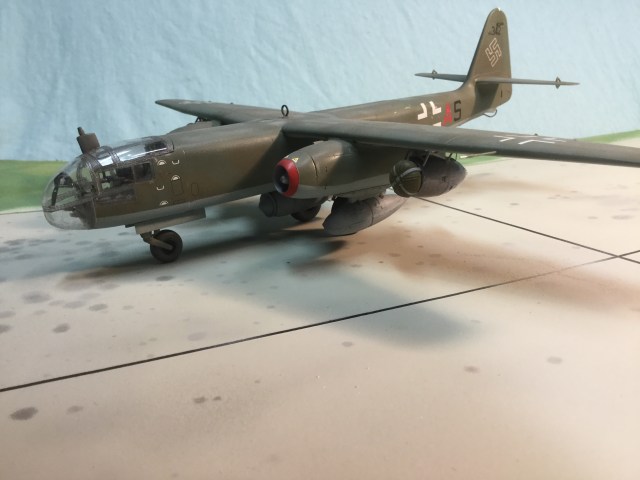
Join me for a brief look at the tail end of the global war and the first jet bomber to enter service. Continue reading
An account of the last year of World War II in the Pacific, this book is the latest from the author of “Last Stand of the Tin Can Sailors” and “Neptune’s Inferno”.
Join me for a brief look at an excellent history. Continue reading
The Japanese were behind other major powers in the development of wartime construction equipment, but late in World War II this bulldozer was used in expanding airfields and roads in the shrunken Empire.

Join me for a brief look at the sort of machine many of us take for granted. Continue reading
Italy is one of those countries with a confused wartime history. Early in the war, Italy’s fascist dictator Benito Mussolini sided with Germany and Japan as the third “major” power of the Axis. But in the end Italians fought and died for both Allies and Axis.

Join me for a brief look at a late war Italian fighter. Continue reading
Flying Tigers
In the first six months of war against Japan, allied successes were few and far between. One of the bright spots was a small group of American mercenaries flying for a disgruntled, half deaf old fighter pilot on the payroll of the Chinese government.

After the jump, we’ll take a look at an unlikely group of heroes and the fighter plane they made famous. Continue reading
I last visited the US Air Force Museum two years ago and wrote about it here. This is a place I could enjoy quite often, so when they provided the excuse of opening a new building this summer I had to go! As always happens I was distracted by the World War I and II building before I even got to the new part, so I had a lot to document once again.
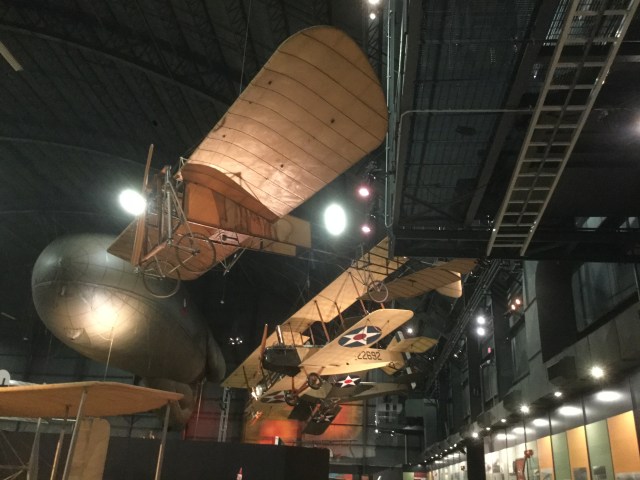
I couldn’t skip the older parts of the museum, I can’t help but love the antiques. A line up of important aircraft, and they’re all originals (not replicas). The Bleriot in front was built in 1910 in Chicago from the original design. Next is a J-1 trainer with the more famous JN-4 trainer (Jenny) behind. An impressive line up of very old airframes.

I don’t remember seeing this original Wright B before. It was built in 1910 and was used as a test and demo aircraft by the Air Corps until after World War I. Its the only Wright Flyer I’ve seen with ailerons. I’m not sure if the Wrights switched away from their patented wing warping for this, their final production model; or if this is purely an odd mod. If you can see it up in the dark rafters…

This Colorful Nieuport 24 was a type used early on by American pilots in World War I.
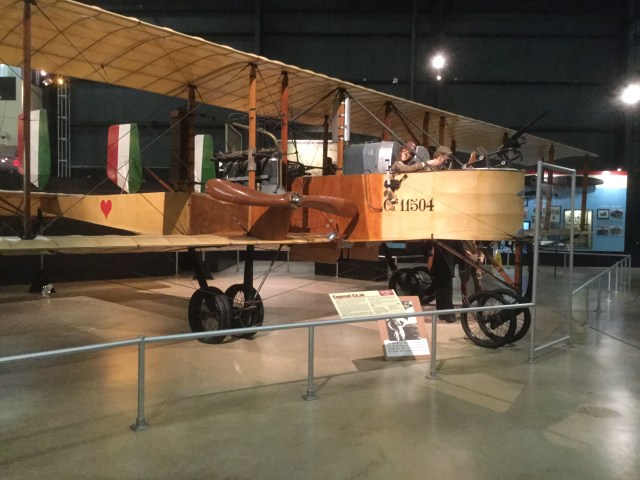
This Caproni Ca36 is the look of heavy bombing in World War I.
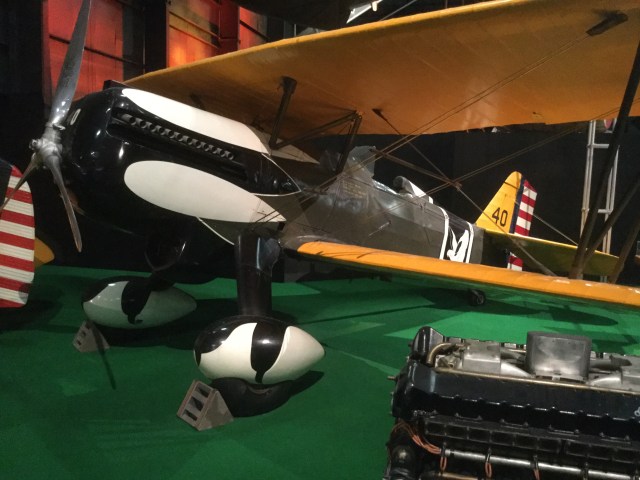
This Curtiss P-6 is another original artifact. I believe its the only P-6 remaining in the world. I love how you can see the advance from World War I designs, but its obviously a long way from the World War II era.

A-36 Apache. An early member of the Mustang family.

I love how the V-1 and V-2 are right next to each other, I just wish I could have found a better angle to show the difference in size and shape. I also noticed this time that this isn’t really a V-1, the shape of the forward engine mount reveals this as an American JB-2 Loon.

“You can run, but you’ll just die tired” is the motto of one operator of the AC-130A. I can’t imagine a more fitting thing for this type. I didn’t notice how badly the lighting flared in this picture, but maybe that’s right for the “Specter”.

I wanted to include this F-22 Raptor since I could only get a few distance shots when I saw one fly at Thunder Over Michigan a couple weeks ago.

I finally did make it to the new building! Its dual themes are experimental and Presidential aircraft. This P-75A Eagle is a beast of an airplane. Conceived early in World War II it was meant to reuse as many “off the shelf” components as possible. It was powered by an Allison V-3420 engine, which is really just two V-1710s in tandem. It is armed with ten .50 machine guns (!); that’s three in each wing and four in the cowling around the propeller. To say this was terrible idea and deficient design is severely understating it.
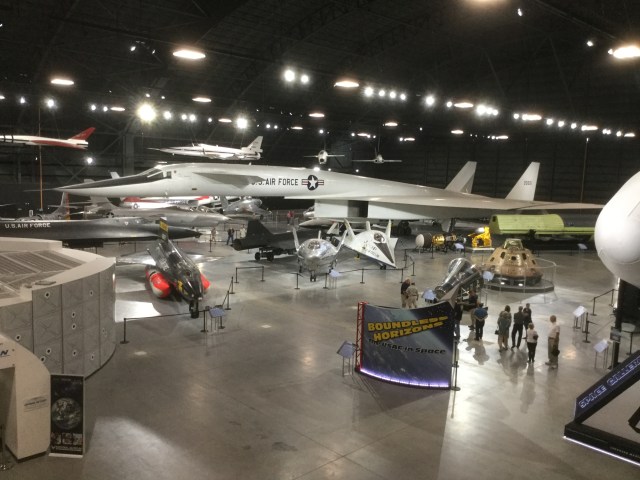
A view of the experimental side of the building. The XB-70 Valkyrie dominates. Its sort of a signature part of the Museum’s collection, even the cafe is named “Valkyrie”. I would have loved to have seen it wheeled into its new spot, I’m sure it doesn’t often see the light of day! This thing is just huge and awesome. And as a “Chuck” fan I just have an affinity for valkyries…
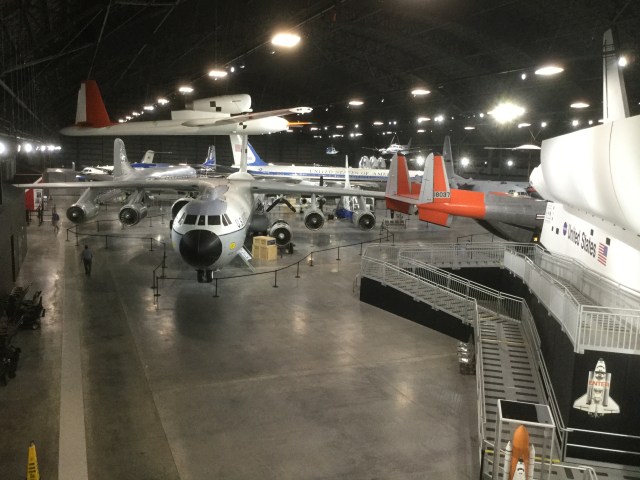
Presidential aircraft are at the other end of the building, with a few large cargo types in between.
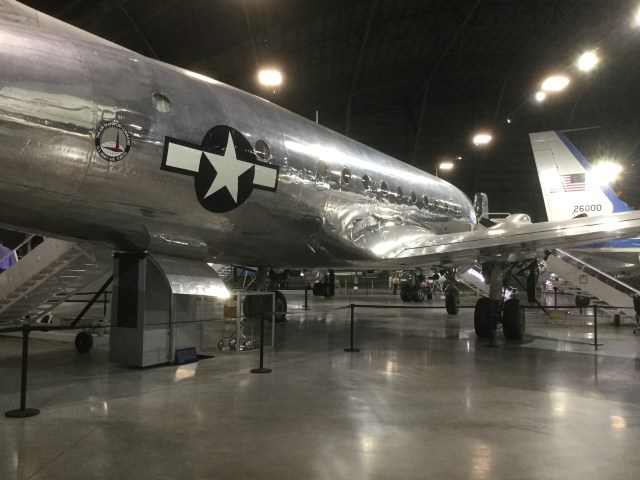
The VC-54 “Sacred Cow” built for FDR. This was the first presidential aircraft. The box structure underneath is the lowered elevator that could lift the president and his wheelchair aboard. FDR only flew this plane for the Yalta conference, but Truman used it for several years. It was on board this plane that Truman signed the executive order creating the US Air Force (from the old Army Air Force).
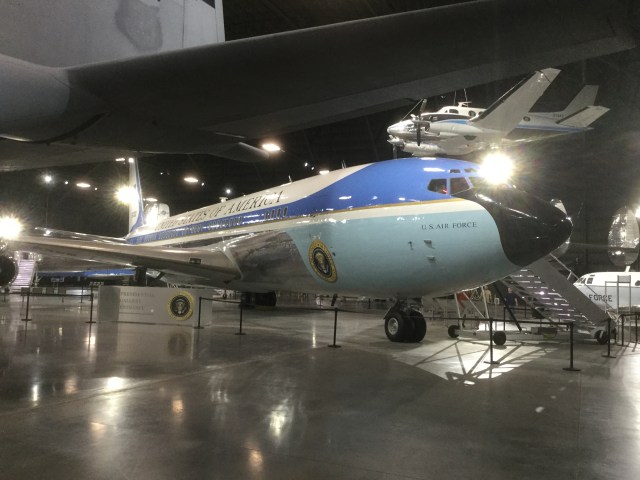
This will always be the definitive “Air Force One” for me and many of my generation. It was on this plane that Lyndon Johnson was sworn in as president. It carried every US president from Kennedy to Reagan.
Well that was fun, I think I’ll go again some day…
 | Spuddling 003… on About This Site |
| Just Goofing Around… on Grumman F4F-4 Wildcat | |
| Grumman F4F-3 Wildca… on Grumman F3F-2 | |
 | atcDave on Cessna OA-37B Dragonfly |
 | Michael Greene on Cessna OA-37B Dragonfly |
 | GP on Douglass TBD-1 Devastator |
 | Pierre Lagacé on Douglass TBD-1 Devastator |
| atcDave on Douglass TBD-1 Devastator |
| Plane Dave is back!… on Douglass TBD-1 Devastator | |
| Pierre Lagacé on Douglass TBD-1 Devastator |
| atcDave on Curtiss-Wright SNC-1 Falcon |
 | tinkll on Curtiss-Wright SNC-1 Falcon |
| atcDave on Lockheed P-38F Lightning |
 | Edwin on Lockheed P-38F Lightning |
| atcDave on North American F-6A Musta… |
 Plane Dave