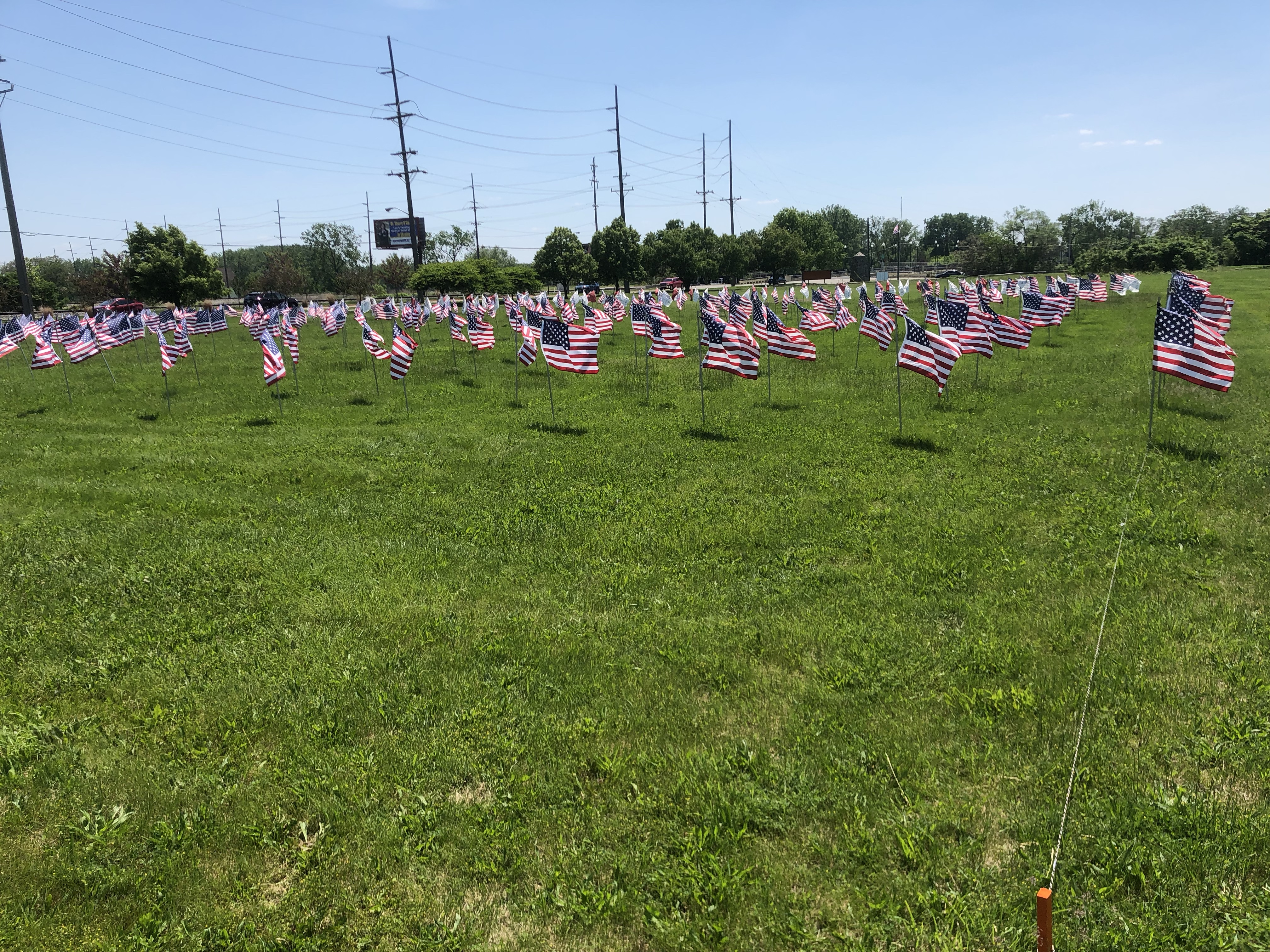
A Day at River Raisin National Battlefield

Memorial Day

Down in Monroe Michigan is a Park that commemorates a War of 1812 battlefield. Apparently, the only such in the United States.
It was certainly the worst defeat, worst massacre suffered by the fledgling nation until that time. On January 18, 1813 United States Army and militia forces under James Winchester (about 1000 men) drove the British and Native Americans out of the Frenchtown area (current day Monroe, this was part of a campaign involving battles in Detroit and nearby Canada). On January 22, British and Native American (about 1400 men) forces under General Henry Proctor retook the town. They mostly achieved complete surprise in spite of General Winchester receiving ample warning of enemy movement in the area. Kentucky militia, camped somewhat distant, acquitted themselves far better by holding out much longer. They were finally convinced to surrender by General Winchester himself, who was already in British custody, but only when they were clearly low on ammunition.
The next day General Procter took his British troops and able bodied prisoners back to Canada. Native American forces then massacred the wounded that had been left behind (between 30 and 100, depending on what sources we believe.
The three events are known as The 1st and 2nd Battles of Frenchtown (or 1st and 2nd Battles of River Raisin) and the River Raisin Massacre.

The battlefield is small, and really right in town. There’s not a lot to see, except for a Memorial Field set up with flags to honor those fallen. A half mile walking trail with markers for points of interest, circles the main battlefield. The River Raisin borders the area about 100 yards south.
The visitor center is new and quite nice with some interesting displays and an excellent diorama of the area right before the battle.
But there’s some serious bad news here too. The introductory films running continuously in the small theater are the worst, most one-sided and biased presentations I’ve ever seen at a US Park. The talking heads narrating the tale are ALL Native American. Apart from some lip service to the fact “atrocities were committed by both sides” they basically just make excuses for the well known massacre that happened here. The adult version of “they started it”. Seriously, you don’t have to know much American history to know settler/native relations were often terrible; and virtually any human being living in North America could find reasons to loathe “the other side” without looking very far. A more honestly balanced telling of the events would be much appreciated (several earlier atrocities by Native Americans were omitted from the story, and significant good deeds of the US Army were overlooked. Maybe they could have asked why the mostly French speaking residents of the area supported the US forces?). But now the woke US Government looks for ways to tell us all how shameful and ugly our own history is, with absolutely no effort to provide meaningful perspective. I felt very sad for those who work there, and angry with whoever is pushing and creating this nonsense.

At least is was a really nice day to walk the battlefield path…

How fitting is it to have a Hellraisin* Hellcat at the River Raisin Battlefield?!
  • actual Dodge color name!
Posted in Museums | 1 Comment

Mitsubishi A6M2 Model 21 Zero

One of the most famous captured aircraft of the War.

Let’s look at the story of a Zero that changed hands early in the Aleutians Campaign.

Continue reading
Posted in Fighter, Japan, USA | Tagged , , | 10 Comments

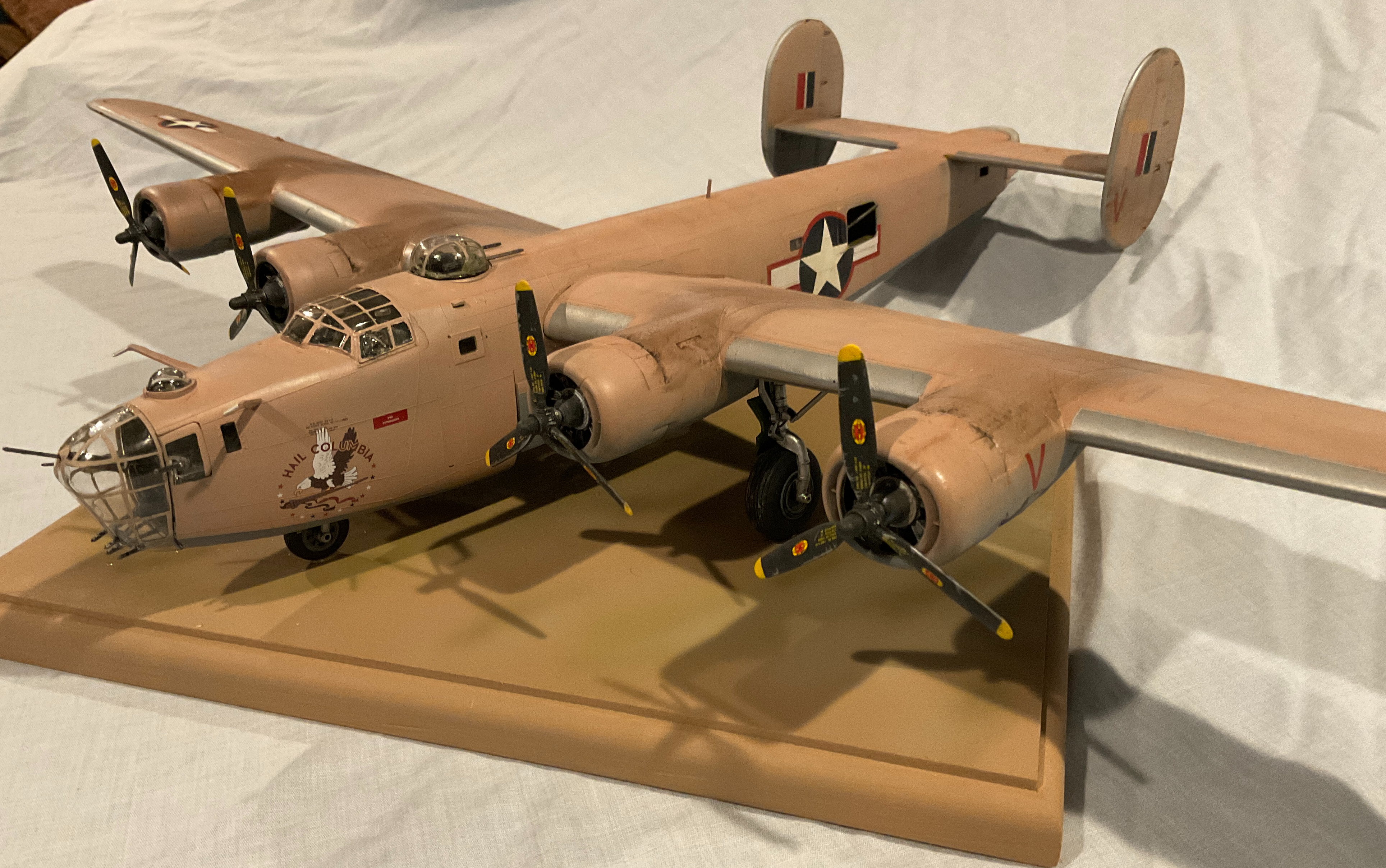
Consolidated B-24D Liberator

Tidal Wave

By mid-1943 the US Army Air Force strategic bombing mission was gaining in size and mass. Most often this means the great bomber formations of the 8th Air Force out of England.

But this time, let’s take a look at an early major operation out of North Africa.

Continue reading
Posted in Bomber - Strategic, USA | Tagged , , | 17 Comments

Grumman F4F-4 Wildcat

Another example of the far flung World at War, let’s take a look at the Wildcat in North Africa.

Continue reading
Posted in Fighter, USA | Tagged , , | 14 Comments

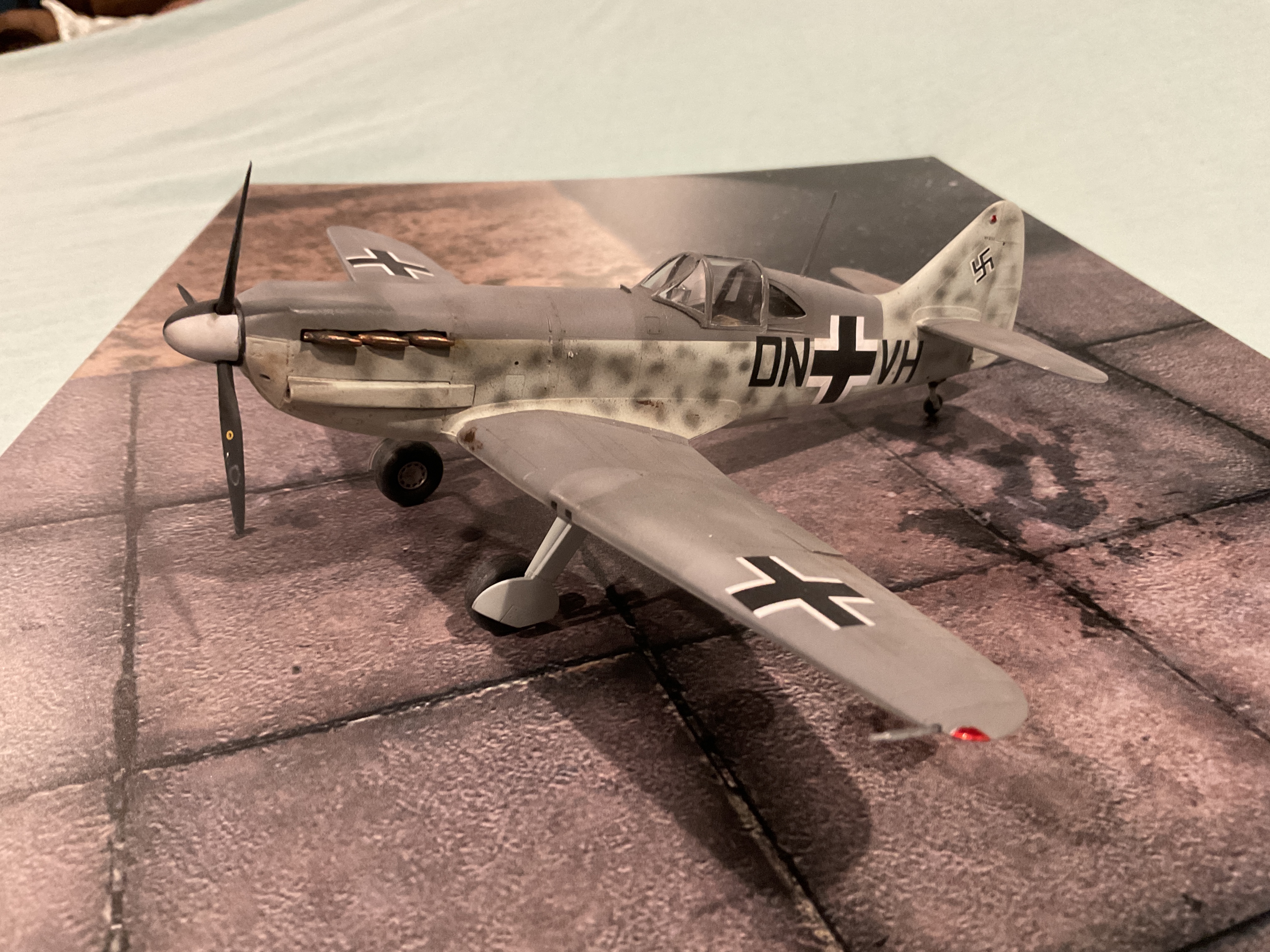
Dewoitine D.520

Easily the best of the French built fighters at the start of the War, with that country’s rapid collapse in Summer 1940 the D.520 fell into enemy hands in large numbers.

Let’s take a look at one that flew with the Luftwaffe.

Continue reading
Posted in Fighter, France, Germany | Tagged , , | 15 Comments

Nakajima Ki-27 Nate

A good pre-War design, the Ki-27 continued in wide service later than most other fighters of its generation.

Let’s look at a fighter that was a part of Japan’s conquest of the Philippines.

Continue reading
Posted in Fighter, Japan | Tagged , , | Leave a comment

Messershmitt Bf 109E-3

Somewhere in Ohio, 1942.

Actually that’s Wright Field near Dayton.
Let’s take a look at a well travelled Messerschmitt.

Continue reading
Posted in Britain, Fighter, France, Germany, USA | Tagged , , | 9 Comments

Republic P-47D Thunderbolt

Another group is another excuse to revisit this favorite type.

Let’s take a quick look at a 9th Air Force ground pounder.

Continue reading
Posted in Fighter, USA | Tagged , , | 6 Comments

Theme Build 4

Captured!

What happens when an aircraft is captured by an opposing combatant? No surprise the best answer may be “it depends”. The vast majority of captured aircraft will be wreckage. Either brought down in combat or captured in a damaged or disabled state. So often in these cases the wreck is simply parted out and melted down.

But occasionally an aircraft in flyable, or at least repairable condition is captured. At the most obvious level such aircraft are thoroughly examined by air intelligence people. Especially if the type is new or rarely seen, a captured (mostly) intact aircraft will be treated as a major source of valuable information. Everything from how does the aircraft perform, what are its strengths and weaknesses, what does the enemy’s technological and industrial ability look like and a whole host of similar findings.
Most major combatants had whole departments that specialized in gathering as much of this sort of information as they could. Smaller militaries might consider re-using the aircraft for themselves, especially if they acquire a type in enough quantity to equip a squadron (Finland comes to mind as doing a lot of this against the Soviets).

The Germans, uniquely as far as I know, captured hardware in such quantities they even reconditioned and resold much of it. They ultimately re-tasked whole captured industries.

For this theme build we’ll look at four examples of aircraft flown by “the other side”. These are all fairly simple kits and the theme could go quickly, but with the caveat I brought up a few weeks back: I am still busy with some family business and a lot of travel is involved, so some simple three week builds may get drawn out over several months. We’ll see!
Our four subjects will be a Messerschmitt Bf 109, a Dewoitine D.520, a Mitsubishi A6M, and a Dornier Do 335.

Posted in Theme Build | 10 Comments

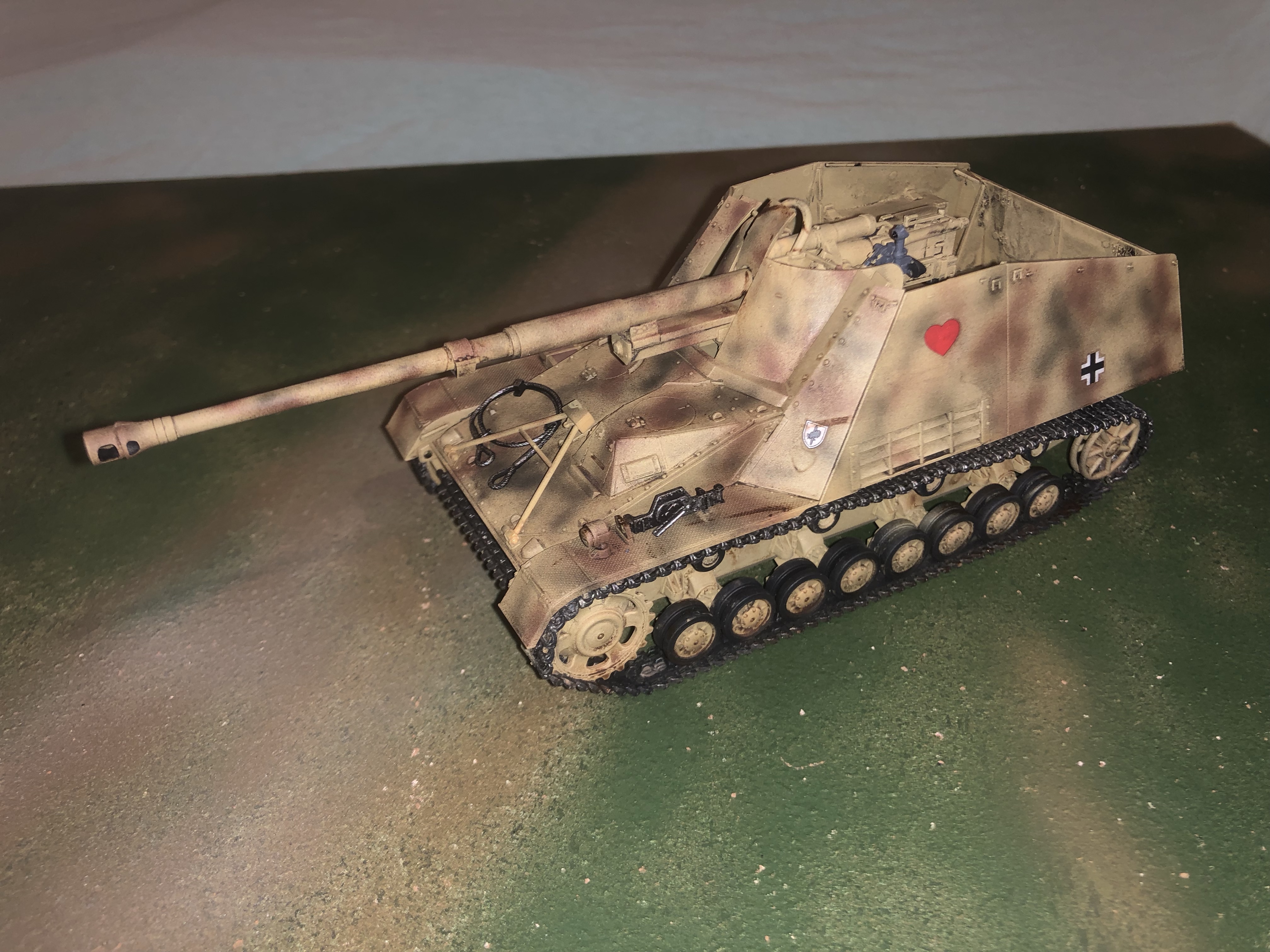
Nashorn – Sd.Kfz 164

Another of Germany’s fearsome tank destroyers, the Nashorn served from mid-1943 to the end of the War.

We’ll take a quick look at this well known hunter.

Continue reading
Posted in Armor, Germany | Tagged , , | 12 Comments