The Japanese Army’s main fighter throughout World War II has become a well known type, but never as well known as the Navy’s Zero.

Let’s take a look at a late War example.
The Oscar had been planned to replace the Ki-27 Nate from before that type even entered service. But the Army had expectations for a replacement that Nakajima struggled to fulfil. Specifically, Army aviation was obsessed with maneuverability. This had also been an issue with the Nate, the first generation monoplane simply couldn’t compete with the older bi-planes for twisting and turning. No surprise, the Ki-43 with a heavier and more powerful engine and (slightly) bigger airframe was even less maneuverable. Army planners and pilots wanted something that could turn like a bi-plane. Never mind that the Oscar was perhaps the most agile monoplane of its generation, more so than the Navy’s Zero, and 30 kts faster.

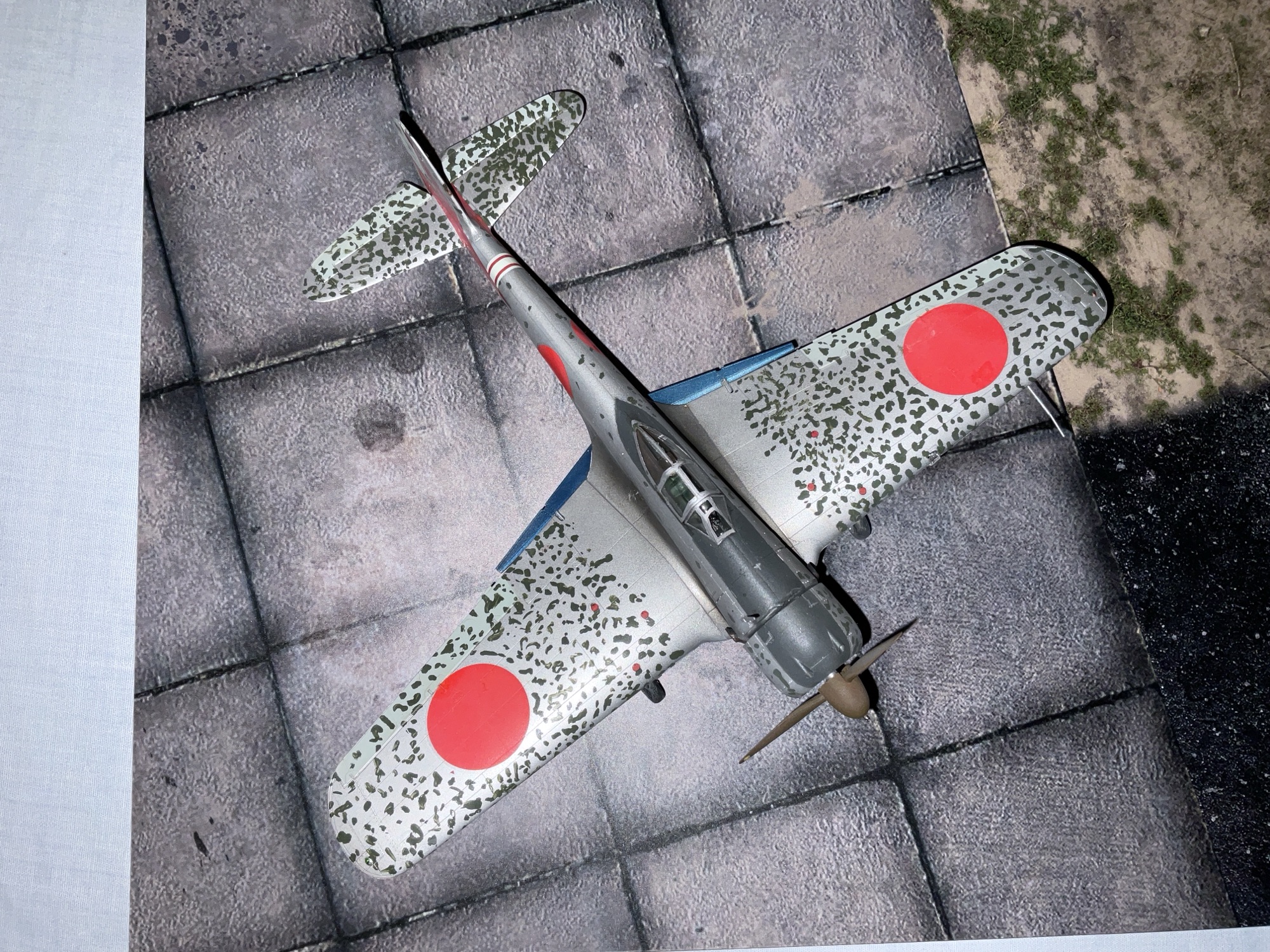
Nakajima responded with over a dozen prototypes with various tweaks and engine changes, but it wasn’t until Army planners were looking at the coming operations in Burma and Malaya that the Oscar’s longer range came to be seen as a huge issue. This plus one significant change on a late prototype, the “Butterfly” combat flap that could be lowered at speed and dramatically improve maneuverability, led to acceptance of the type. The Army went from being indifferent towards the type in 1940, to wanting as many as they could get in 1941. When the War started in December the production Oscar was just entering service and had only filled out a few squadrons.


The Ki-43-II seen here offered several improvements to the type, and entered service from February 1942. The most obvious change was a 2-speed supercharger for improved engine performance at all altitudes. The wing structure was strengthened, light armor was added to the back of the pilot’s seat and self sealing fuel tanks were added. The new protection added was of a very light variety, 13 mm of armor plate and a single thin layer of rubber for the gas tank was well below the standard most combatants used, but it was an improvement over nothing. Other changes involved raising the pilot’s seating position (and raising the canopy slightly) and a reflector type gunsight. And significantly, this mark of Oscar replaced the original two light machine guns with two heavy machine guns.

Overall, the Ki-43-II was a completely competent early War type. Like every aircraft it had its good points and bad. It was easy to build and service, it was easy to fly, and it was supremely maneuverable. On the minus side it was fragile, very vulnerable to the sort of heavy firepower Allied aircraft could unleash. Its firepower was always light too, two machine guns synchronized to fire through the propeller (reducing rate of fire by up to half). It was agile and light even compared to the Navy’s Zero, but that also meant it was fragile.

Surprisingly, the type remained in production to the end of the War. The last major improvement (as the Ki-43-III) entered service in 1945. This was a good refresh of the design with all systems improved. But a new type was needed. Indeed, new types were available and even Nakajima had switched away from building Oscars in 1944. But one plant (Tachikawa) continued building them to the end.
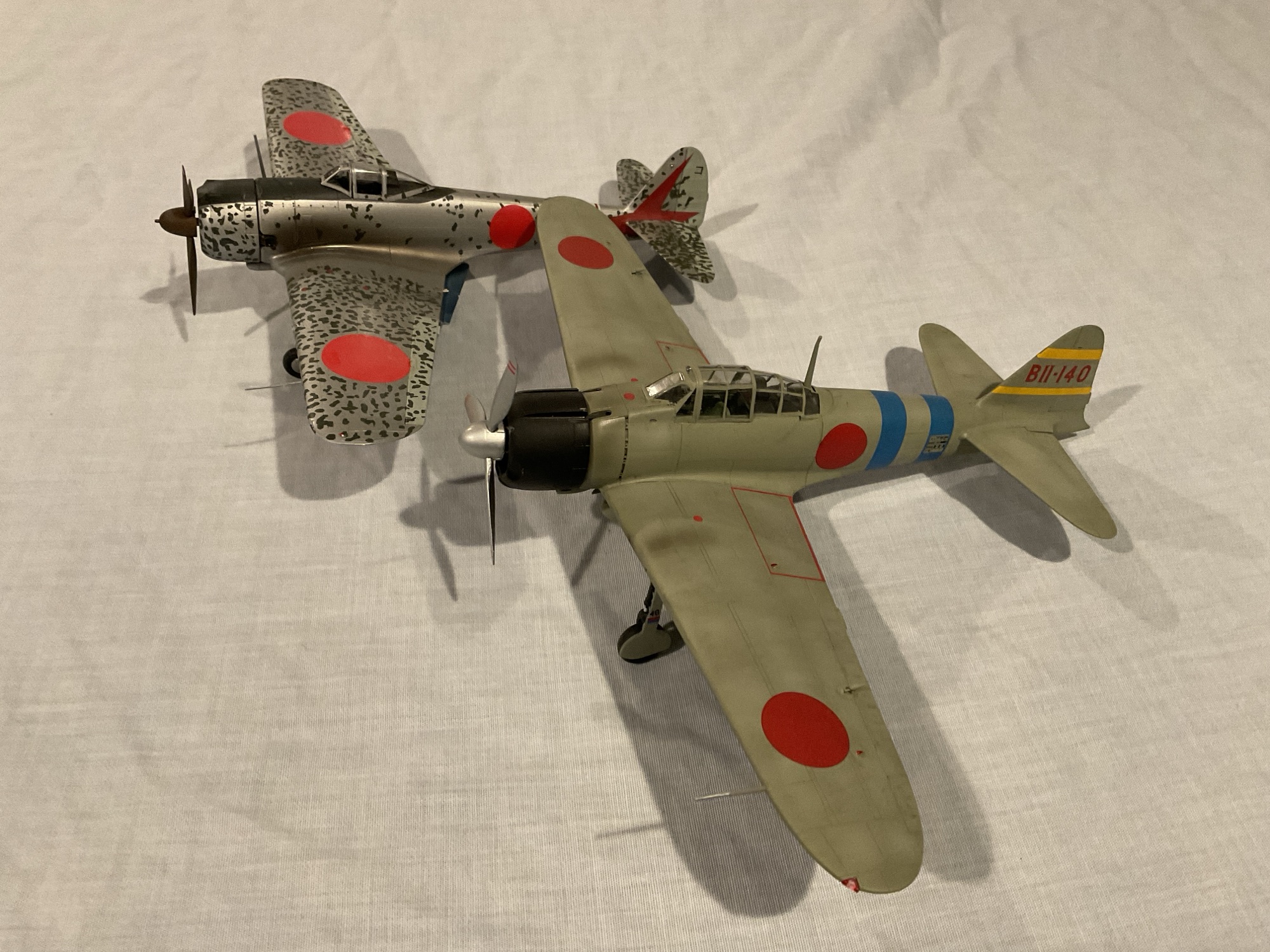
This aircraft was assigned to the 3rd Squadron of the 54th Air Regiment, early 1944. It was based in the Kurile Islands and charged with air defense of the northern islands. This would have been mostly monotonous patrol flying, with occasional excitement coming from US forces in the Aleutians making their presence known with raids and patrols.
Late in 1944, the 54th Regiment was relocated to the Philippines. Its claim to fame coming on January 7, 1945 when a single Oscar piloted by Warrant Officer Akira Sugimoto attacked a flight of four P-38s. He had nearly set up his shot on one Lightning, when another flown by American Ace Tommy McGuire cut in front of him. Sugimoto, a highly experience former instructor, switched to this new more prominent target. McGuire tightened his turn, but at low speed and only 300 ft altitude, he stalled and crashed to his death. Sugimoto was promptly shot down by another P-38 flown by Major Jack Rittmayer.
Its worth noting an Oscar had scored this significant kill against a far more advanced American type with a highly proficient pilot, purely using its superior maneuverability.

This is the Hasegawa kit. A simple build of a simple airplane. The camouflage was the most difficult part of the project, it was brush painted and took over an hour on two days. An interesting quirk (but probably only to me…) is that this aircraft was document without the yellow leading edge stripes, even though those had been standard Japanese markings for over a year at this point.


 Plane Dave
Very interesting thread commentary, particularly the disadvantage in weight of fire when firing through the propellor arc. Thank you.
The interrupter gear was an issue, balance that against the merits of aiming directly with the fuselage with no concerns of converging fire. Two HMGs still sounds light to me. Although, the Japanese did use exploding ammunition of every size. Making their MGs little cannons.