
Early production Mustangs often generate a lot of confusion and mis-information.

Let’s take a look at one and it’s role.
I’m sure most readers know the story of how the Mustang was developed for the RAF in record time. I previously told the story of how the A-36 came to be, an improvisation of the Mustang as a dive bomber that led to 500 aircraft being ordered when the future of the whole program was in question.
But that doesn’t quite mean there was no interest in the Mustang from higher officials. A few oddities turn up when we look at dates. In May 1940, just as the Battle of France was getting underway, the British ordered 320 Mustang Mk I from North American. They were very pleased with the prototype and another 300 were added to the order before deliveries had even begun. One requirement from the US for doing business with an American company during wartime, was that two of the first examples were to be handed over to the USAAF for testing. These became the XP-51 prototypes and were delivered to Wright Field (Dayton, Oh) in August 1941.
But curiously, the month before, USAAF had ordered 150 aircraft as P-51 (no suffix) Mustangs. It had already been decided that the mixed battery of .50 and .30 machine guns used by the British was not wanted so the P-51 would be delivered with four 20 mm cannon. Otherwise it was mostly identical to the Mustang Mk I. The A-36 was also derived from the Mustang Mk I (specifically XP-51). My sources do specify the P-51A was derived from an A-36 airframe, but I think the miscellaneous changes between these models were all pretty trivial so that may be splitting hairs.
But here’s what I found fascinating. We all know the story about how the USAAF did not acknowledge the need for high altitude, long-range bomber escorts and played little attention to the early Mustang’s potential. Yet two aircraft, from that July 1941 order for 150 P-51 Mustangs, were ordered to be held back for conversion work to the new Packard Merlin engine. That looks to me like someone was planning ahead. Even if Spaatz and Eaker didn’t think they needed escorts for the bombers, someone high up in USAAF (and I have seen it said that Hap Arnold himself was in on this) was looking for a War winning weapon for the skies of Europe.
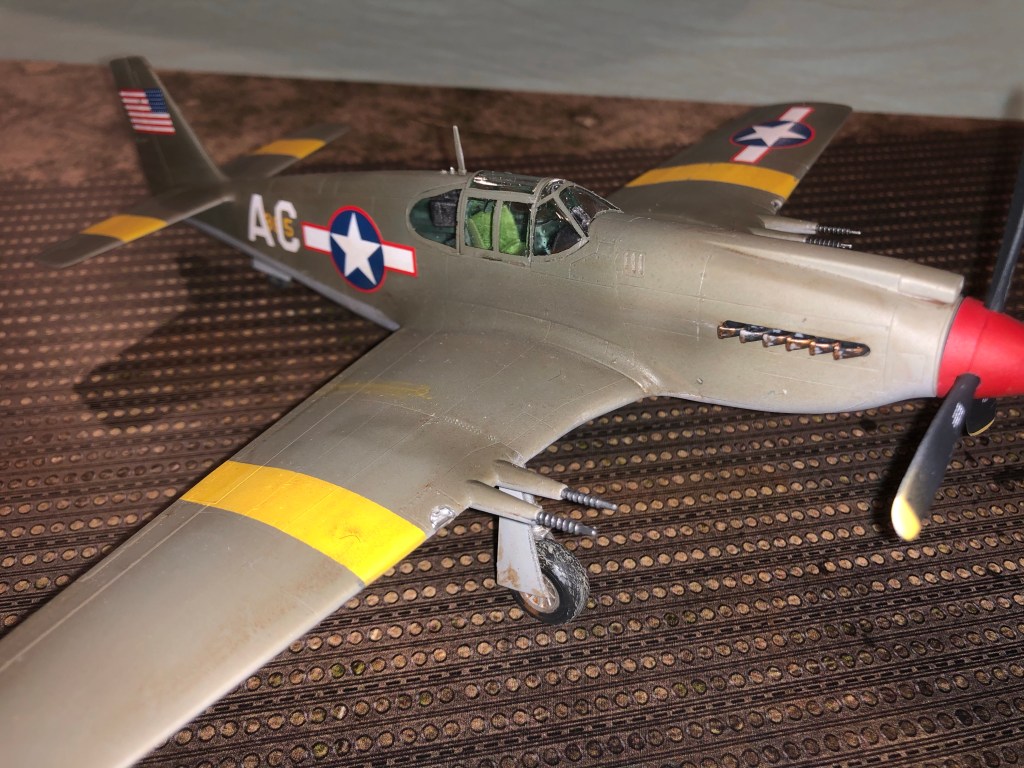
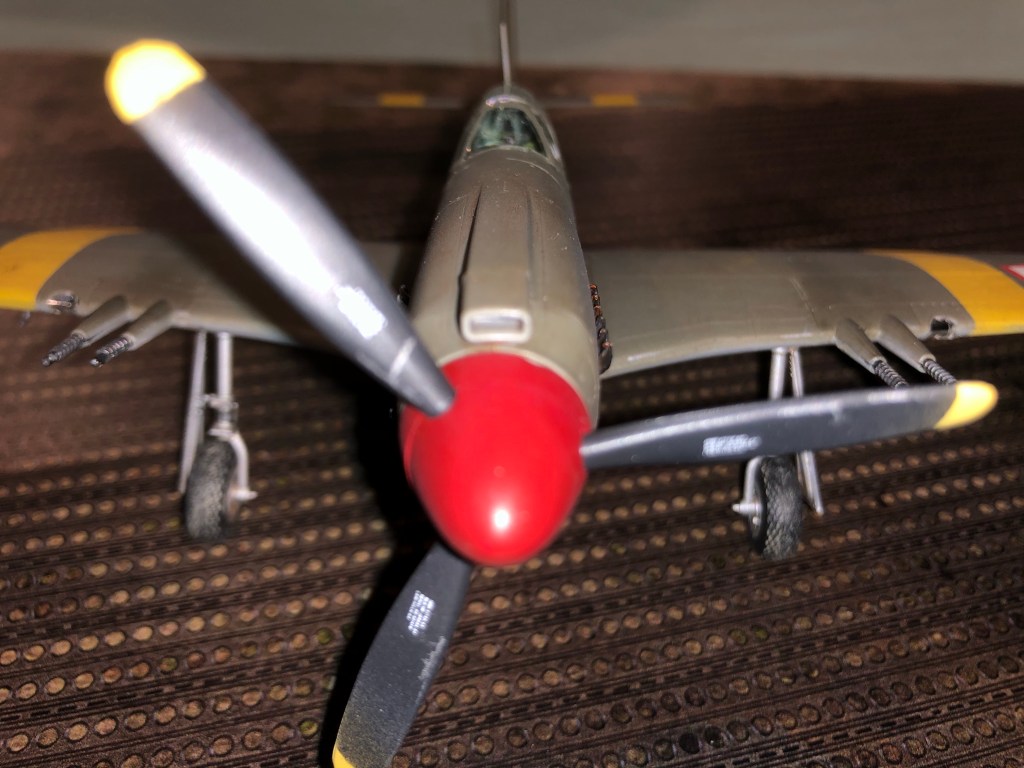
What happened with the actual production run of P-51 (no suffix) Mustangs is a little hard to follow. All 150 were built. Apparently 93 of them were then lend-leased to Britain. Because they only differed from the Mk I in armament they were labeled as Mk Ia. Minus the two held back for testing, that means USAAF took delivery of 55.
My sources suggest all 55 had cameras installed for tactical recon work. Summer of 1942 they were re-designated F-6A. But I have seen photos identified as P-51 (no suffix) Mustangs in the War zone. So maybe all 55 were not converted? Or maybe some users just didn’t go for the new designation?*
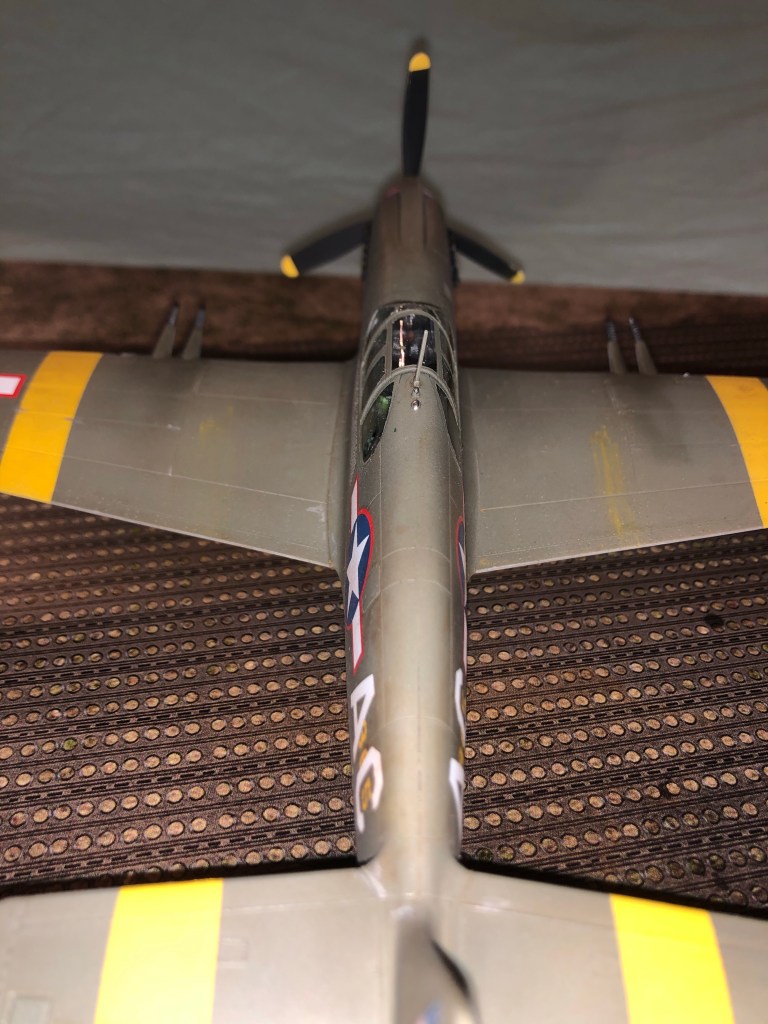
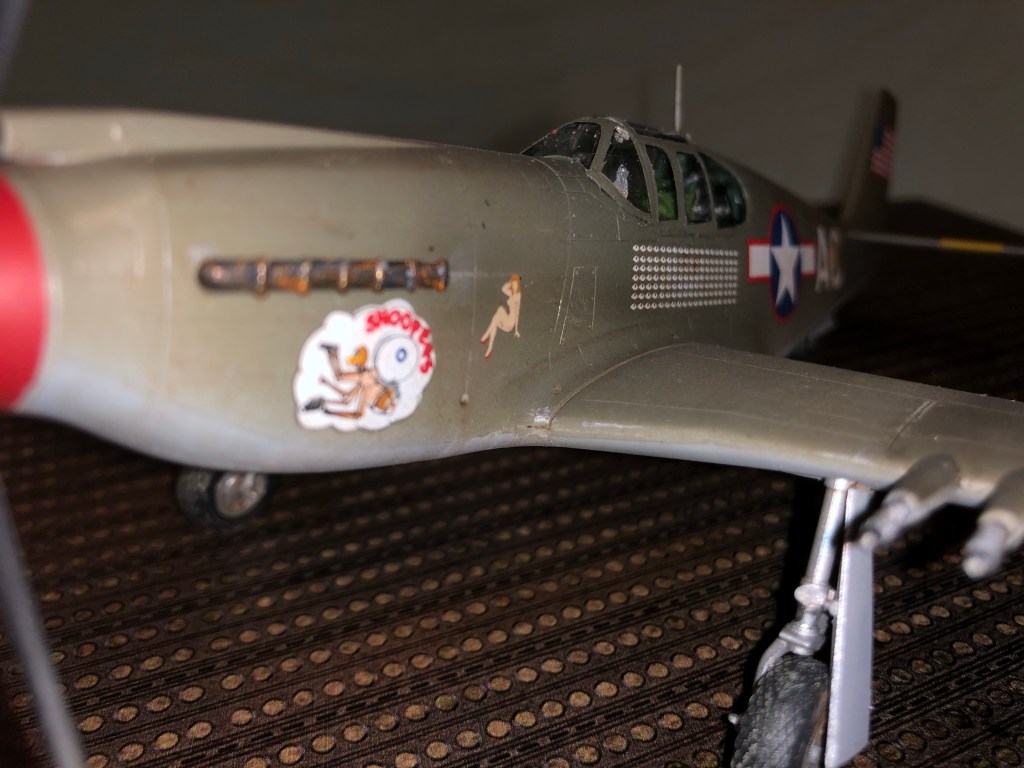
The 68th Tactical Reconnaissance Group came to be the first USAAF users of the Mustang in combat, April 1943. The component squadrons of the group were all equipped with different types for different types of photography, each squadron of the group had its own mix of types. The 154 TRS flew that first Mustang mission, but by summer of ’43 it had been decided to concentrate the Mustangs in the 111th TRS. Usually looking to “shoot” in two senses of the word. They would go out in pairs or fours looking at deployments, depots and transportation. Every version of the Mustang was long ranged, so they could do such patrols deep into enemy territory. Since the 111th and 154th TRS were in North Africa that often meant patrolling over Sicily or Italy. They were officially “discouraged” from mixing with enemy fighters which limited their air-to-air opportunities. Some TacRecon pilots would make Ace, but I believe that occurred after conversion to later Merlin engined Mustangs.
I’ve also noticed much inconsistency on how these planes are recorded apart from just F-6A/P-51. At least one book in my possession claims the F-6A was converted from the P-51A; apart from noting a certain tidy symmetry to that, I’m quite sure the P-51A conversion was actually an F-6B (and I should eventually build one of those too!). P-51B and P-51C models both became F-6C.
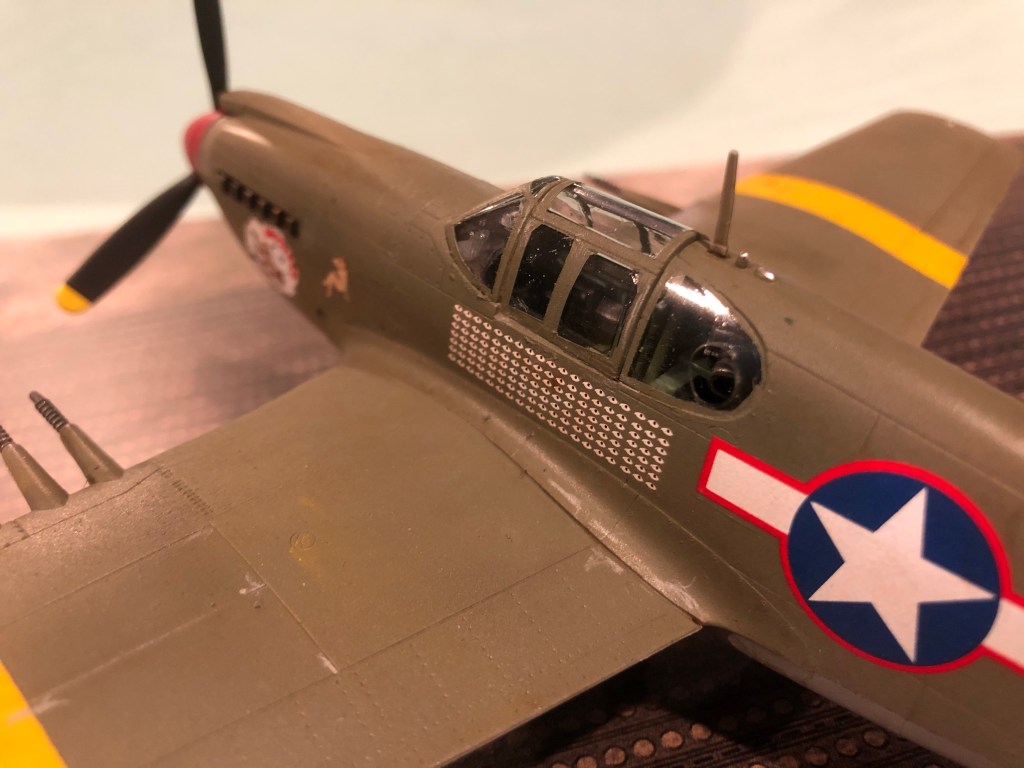
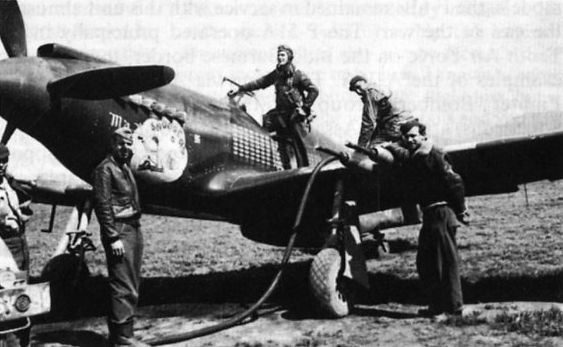
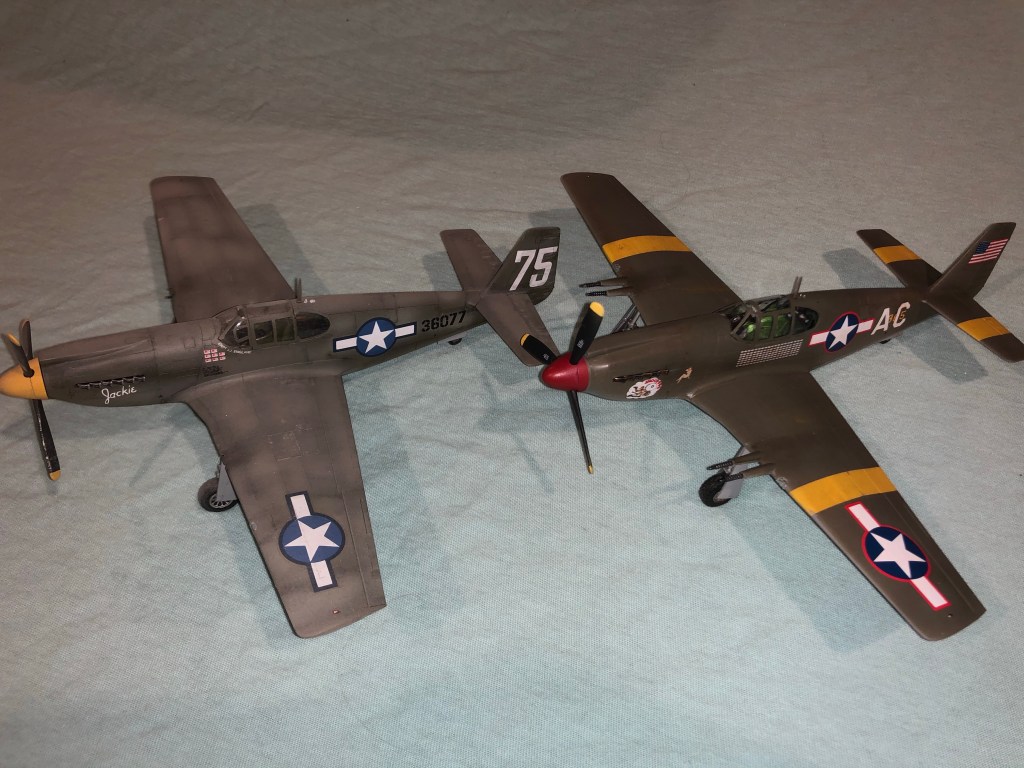
This is the Accurate Miniatures kit, still the only Allison Mustang available in this scale. It is really a beautiful kit and compares well to the contemporary Tamiya Merlin Mustangs. Of course Tamiya fit is slightly superior, but its not a huge difference.
- A reader, Robert Bourlier, contacted me with some more in depth and more correct information about all of this. To start, the RAF received 92 airplanes as Mustang Mk Ia (not 93 as I stated in the body of the story). The other airframe went to the USN for evaluation and suitability tests.
55 planes, as stated in the article, were retained by the USAAF. I mentioned these planes were equipped with cameras as photo recon types, the F-6A. Strictly speaking this was considered a Tactical Recon conversion (Tac-R), a little different from photo recon in that it would retain full armament. Two planes were sent to modification centers as patterns, the first was the North American Aviation factory and this was designated a P-51-1. The second was done at Wright Material Command (at Wright Field in Dayton, Ohio) and was designated P-51-2. The Wright Material Command version was chosen and 45 were sent to the Minneapolis Modification Center to be built to the P-51-2 form. At Minneapolis these were designated F-6A (maybe, it is apparently unclear if this designation was ever officially issued), but before any were completed, the F-6A designation was officially cancelled and they were finished as P-51-2. Apparently often referred to as P-51 Tac-R.
The 8 unmodified, and 10 modified P-51 aircraft remained stateside for training, while 35 were sent to 12th Air Force in Algeria for operational use.
Later, P-51A/B/C/D/K were all given Tac-R mods. But these were only listed as P-51*whatever* with a Tac-R mod until May 1944 when the F-6B/C/D/K designations were made official. The F-6A designation remains officially “cancelled”.
That sort of answers a question of mine while opening a significant can of worms! Any mention of a P-51 (no suffix) aircraft in service is completely correct. Its the F-6A designation that is wrong, and the other F-6 designations are actually anachronistic prior to the last year and a half of the War.


 Plane Dave
Kind of like the War of the Roses. Everybody has some claim, nobody’s is entirely clear and there are mysterious side branches that keep popping up just when you think you have it figured out. In the end the “True King” emerged… And killed a lot of enemies.
It is funny to me how confused some details get. Converted or re-manufactured airplanes are the worst!
Pingback: North American F-6A Mustang – faujibratsden
A reader, Robert Bourlier, contacted me with some more in depth and more correct information about all of this. To start, the RAF received 92 airplanes as Mustang Mk Ia (not 93 as I stated in the body of the story). The other airframe went to the USN for evaluation and suitability tests.
55 planes, as stated in the article, were retained by the USAAF. I mentioned these planes were equipped with cameras as photo recon types, the F-6A. Strictly speaking this was considered a Tactical Recon conversion (Tac-R), a little different from photo recon in that it would retain full armament. Two planes were sent to modification centers as patterns, the first was the North American Aviation factory and this was designated a P-51-1. The second was done at Wright Material Command (at Wright Field in Dayton, Ohio) and was designated P-51-2. The Wright Material Command version was chosen and 45 were sent to the Minneapolis Modification Center to be built to the P-51-2 form. At Minneapolis these were designated F-6A (maybe, it is apparently unclear if this designation was ever officially issued), but before any were completed, the F-6A designation was officially cancelled and they were finished as P-51-2. Apparently often referred to as P-51 Tac-R.
The 8 unmodified, and 10 modified P-51 aircraft remained stateside for training, while 35 were sent to 12th Air Force in Algeria for operational use.
Later, P-51A/B/C/D/K were all given Tac-R mods. But these were only listed as P-51*whatever* with a Tac-R mod until May 1944 when the F-6B/C/D/K designations were made official. The F-6A designation remains officially “cancelled”.
That sort of answers a question of mine while opening a significant can of worms! Any mention of a P-51 (no suffix) aircraft in service is completely correct. Its the F-6A designation that is wrong, and the other F-6 designations are actually anachronistic prior to the last year and a half of the War.
Hi
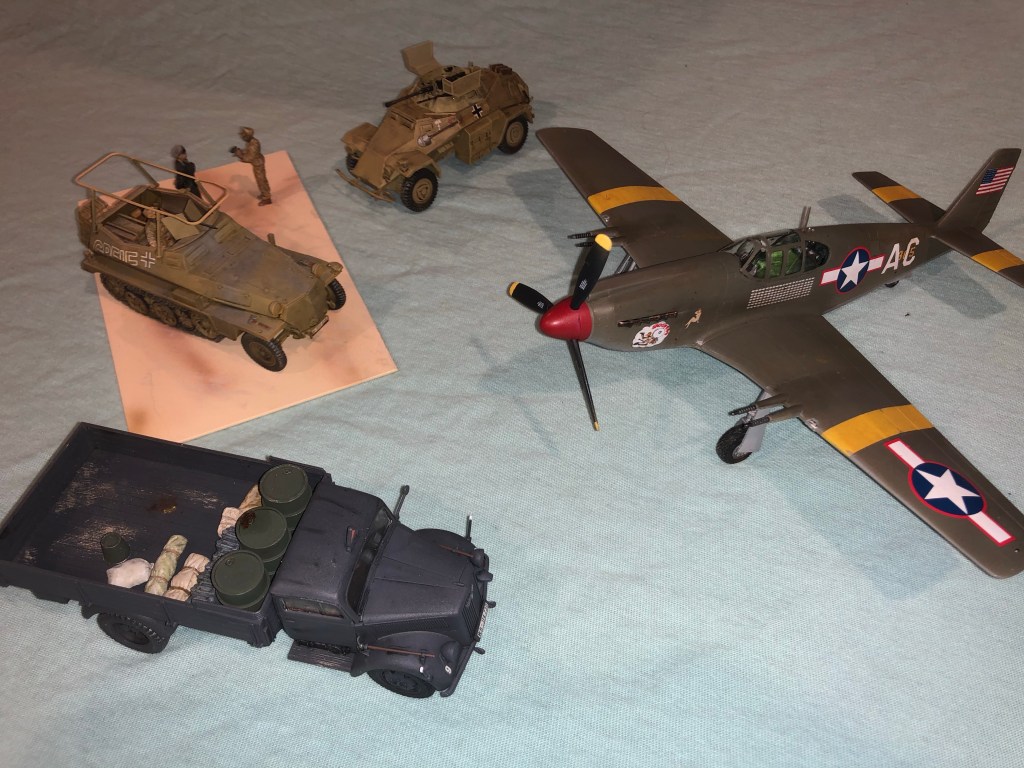
Thanks for your insight into this topic. I have a question: Is the US flag on the rudder somehow attested? I have not been able to find any picture showing the flag.
At the very start of US operations in North Africa it was feared between the US being a new player in the theater, and a number of convoluted colonial and Old World (ahem… French…) politics and prejudices that the flag would be added to US combat aircraft to make it very clear who they were. I’ve seen it very prominent on A-20 and B-25. You are right, it’s not as well documented on Mustangs.
A casual search I just did showed exactly zero photos of the flag on any Mustang. Of course it also showed zero Allison Mustangs in the Mediterranean. My usual sources for such things were no help either. So often, I end up working from markings guides, and even make suppositions when sources conflict (look at my P-39L post!)
I have a few other ideas I may look through later tonight. Seriously, in the back of my mind I feel certain I’ve seen a photo of this. But at this moment I can only say “it was supposed to be there…”
Thank you for you quick reply. The flag is clearly visible in pictures of another F-6A – “Mah Sweet Eva Lee”. As for “Snoopers”, all pictures I found have somehow obstructed view of the rudder. 😦
“Mah Sweet Eva Lee” was a helpful search term! Yes I see that now.
But hey, I just learned there weren’t any F-6As, don’t confuse me!
The American flag was on the tail of the P-51-2-NAs flown in N. Africa by the 154th OS/TRS. I have several photos that testify to this. I also have the history of each of the 58 P-51s (NA-91) held back from the British order. As for the use of the F-6 designation – it did not come into common use until April – May 1944. The 67th TRG designated their Tac-R P-51As as F-6As, their Bs as F-6Bs and the Cs as F-6Cs. I have copies of the Group records that verify this.
Thank you for reply. I have no record or any pictures of a flag on the tail – only the S/N as normal.
If you have not seen the plane info from my uncle, I list it below (may have been posted already)
Aircraft Type: F6B…..Originally designated as P-51A
Plane Serial Number: 42-106728 (S/# confirmed from Form 1900 from US Govt)
Nickname of Aircraft: Cotton Tail with a picture of a duck.
Engines: type-model-series V-1650-3
Engine Number: 49-49489
Very much enjoyed your article, and I too have been very confused at the multitude of info (& conflicting info) on the Photo Recon Mustangs. My interest stems from my Uncle who flew a F6-B Mustang in the 160th Tactical Reconnaissance Squadron, and was shot down/reported missing 18 March, 1945
Near Siegen, Germany. The data I dug up was specifically based on Gov’t reports on the MIA report, as well as searching the engine serial no. What I found is listed below, and if you think you can clarify this mystery, please let me know. Lastly – I dabbled in my own model building last yr and created my own F-6B, with cameras, and painted it silver as shown in one of my uncle’s pictures in front of his plane. Great experience and soooo glad I tried it. Even though I was a beginner, it turned out pretty nice and I have it resting (proudly) on my book shelf at work.
Aircraft Type: F6B Originally designated as P-51A
Serial Number: 42-106728 Confirmed from Form 1900 from US Govt
Nickname of Aircraft: Cotton Tail with a picture of a duck.
Engines: type-model-series V-1650-3
Engine Number: 49-49489
No doubt Mustang designations are confusing. And unfortunately, there is at least one error in the official documentation. The P-51A (F-6B) should have an Alison V-1710 engine. But that date strikes me as very late for an Alison Mustang to still be flying combat over Europe. So my guess is, the engine is right (Packard V-1650 Merlin) but then the model is wrong. It was *probably* a P-51B/C converted to an F-6C.
I have a big Bible of Mustang serial numbers at home, but since I’m currently at an airshow, I’ll try to look into that tonight!
According to “Mustang” by Robert Gruenhagen, 42-106728 was built as a P-51B-10NA. That’s the 3rd block of P-51B aircraft built at North American’s Burbank plant. It was converted to a F-6C
Mysteries deepen, I don’t see any Mustang squadron listed by that number. The 160th TRS I see was formed with the Alabama Air National Guard in 1947. Although there were several such squadrons attached to the 9th Air Force that would have operated at that time and place. Is it possible something was jumbled by Wartime censorship? Or maybe he flew for the OSS?!
Thank you very much for researching this topic. Very interesting. To answer your question, yes – the US War Dept may have given wrong Squadron numbers, and I have some of the scanned reports and maps from the War Dept on where my Uncle was last heard from (Siegen, Germany). The copies have numerous corrections on them, so not sure I trust all the numbers. I would be willing to forward to you the info I have on the plane and map location, but not in this public forum (I hope you understand). Thanks again for the research……look forward to your reply.
Yes absolutely. You can contact me by e-mail from the “Contact Me” header at the top of the page. Although I have to warn you, if the official numbers are wrong I don’t know what I can find. If there are pictures we could probably correctly identify the unit. Or if a home base is located we might be able to figure it out (at least to a group level, probably not squadron).
Due to the need for additional tactical reconnaissance groups in the ETO, in August 1944 the 363rd FG was redesignated the 363rd TRG and its three fighter squadrons, the 380th, 381st & 382nd were redesignated as the 160th TRS, 161st TRS & 162nd TRS. Most of the fighter pilots were reassigned to other fighter groups and replaced by Tac-R trained pilots. The Groups P-51s were also reassigned to fighter squadrons and replaced by some F-6D (Tac-R P-51Ds) and many of the P-51 B/Cs were sent to the UK for modification to F-6 standards including cameras & associated controls and Malcolm Hoods. The 162nd TRS would later be reassigned to the Provisional Reconnaissance Group under XII TAC and would operate with the 111th TRS, a squadron that had operated with XII TAC from N. Africa, Sicily, Italy, Corsica and the allied landings in Southern France.
Wow Robert, a lot of great info there. Thank you!
Got it, Dave. Will try and see how I make out getting the historical info to you. And please forgive the quality – remember that these are old (1945) scanned copies from the War Dept with multiple insertions and corrections done on typewriters…………not our fancy laptops/tablets with autocorrect S/W.