
Obviously a favorite type of mine, this time we’ll look mostly at origins and early use.
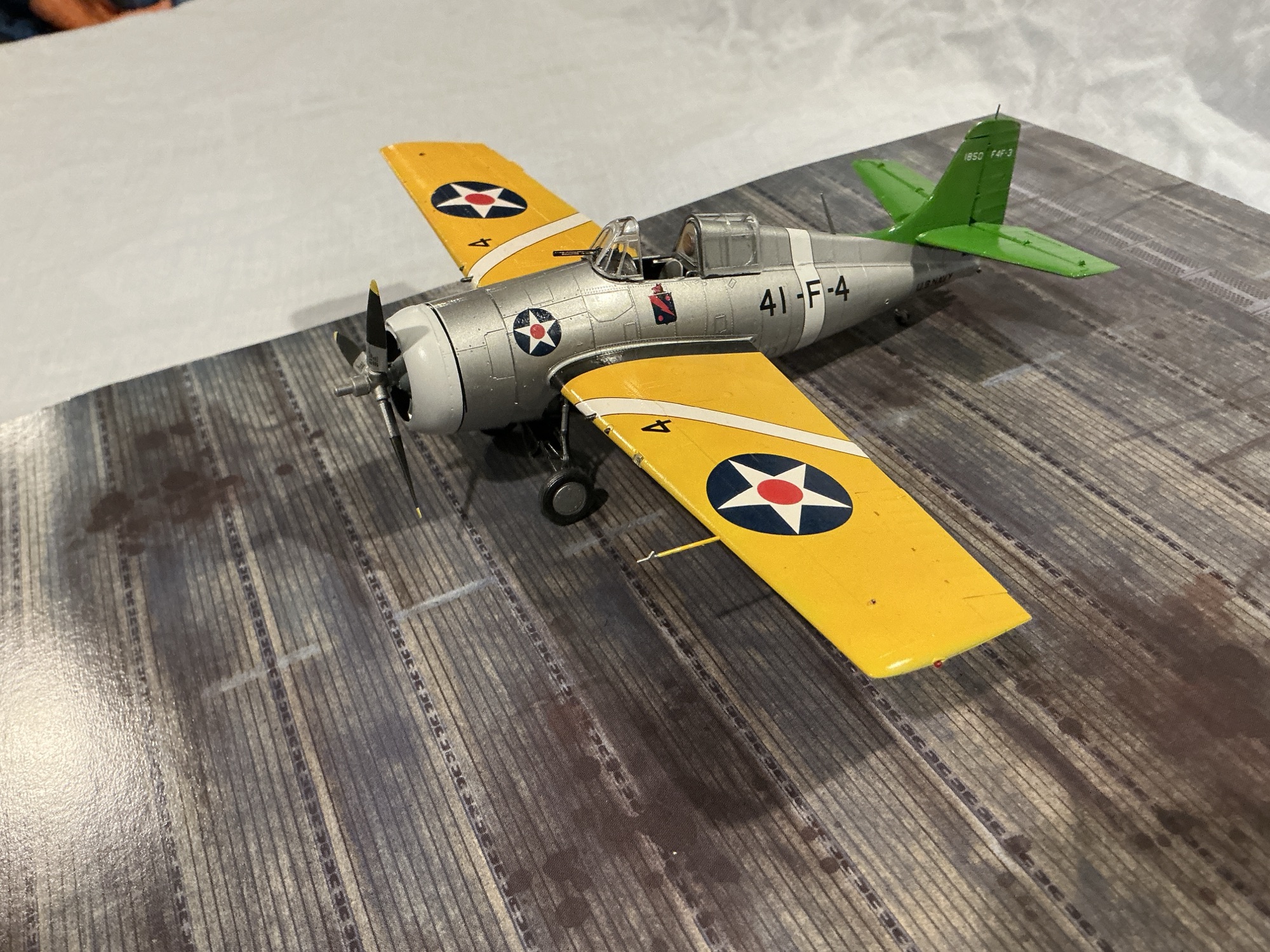
Join me for a quick look at the first production model of the well known naval fighter.
I’ve posted before about Grumman’s history providing bi-plane fighters to the US Navy (post on F3F-2, for example). By the mid-1930s monoplane fighters were in development or just entering service, such examples as Hawker Hurricane, Supermarine Spitfire, Messerschmitt Bf 109 and Curtiss P-36. But Grumman knew of the Navy’s preference for bi-planes, because of the thought that bi-planes would continue to be preferable on aircraft carriers. So they started design work on an XF4F-1 that was essentially an improved F3F-3, a bi-plane.
But the Navy was actually a little more forward thinking than Grumman credited them with. Monoplane Dive and Torpedo bombers were in development. When it came to Grumman’s attention that Brewster was working on a XF2A Buffalo, a monoplane fighter, well Grumman threw out the plans and started over. An XF4F-2 would be a monoplane.
But Grumman made the change late. Even though the XF4F-2 incorporated many elements that would be recognizable on any Wildcat, in significant ways it was less refined than Brewster’s XF2A-1 Buffalo. When comparative trials were made of the types in April 1938, the Buffalo won the competition.
The Navy did have some concerns with the Buffalo and Brewster, and they encouraged Grumman to fix what was wrong with their design. Grumman took the challenge seriously, doing what were high-tech aerodynamic tests for the time, to sort out details and shapes.
In February 1939 the XF4F-3 first flew. It not only showed much improved performance, but it exceeded the Buffalo’s performance in every significant category. Meanwhile, Brewster was having problems keeping to the Navy’s requested delivery schedule (Brewster is ultimately a sad story, but their problems did not emerge overnight). In August 1939 the Navy placed their first order, for 54 Grumman Wildcats.
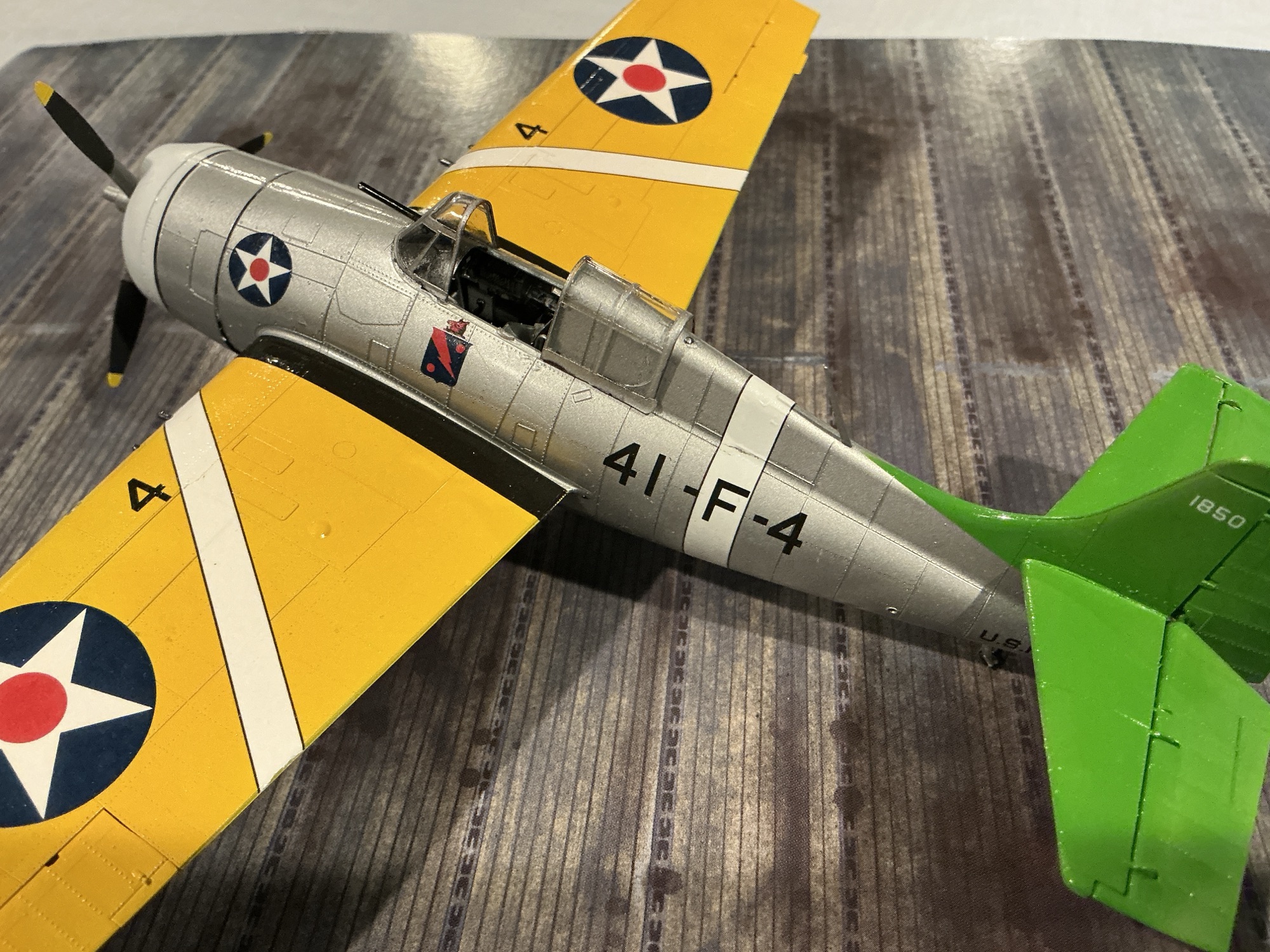
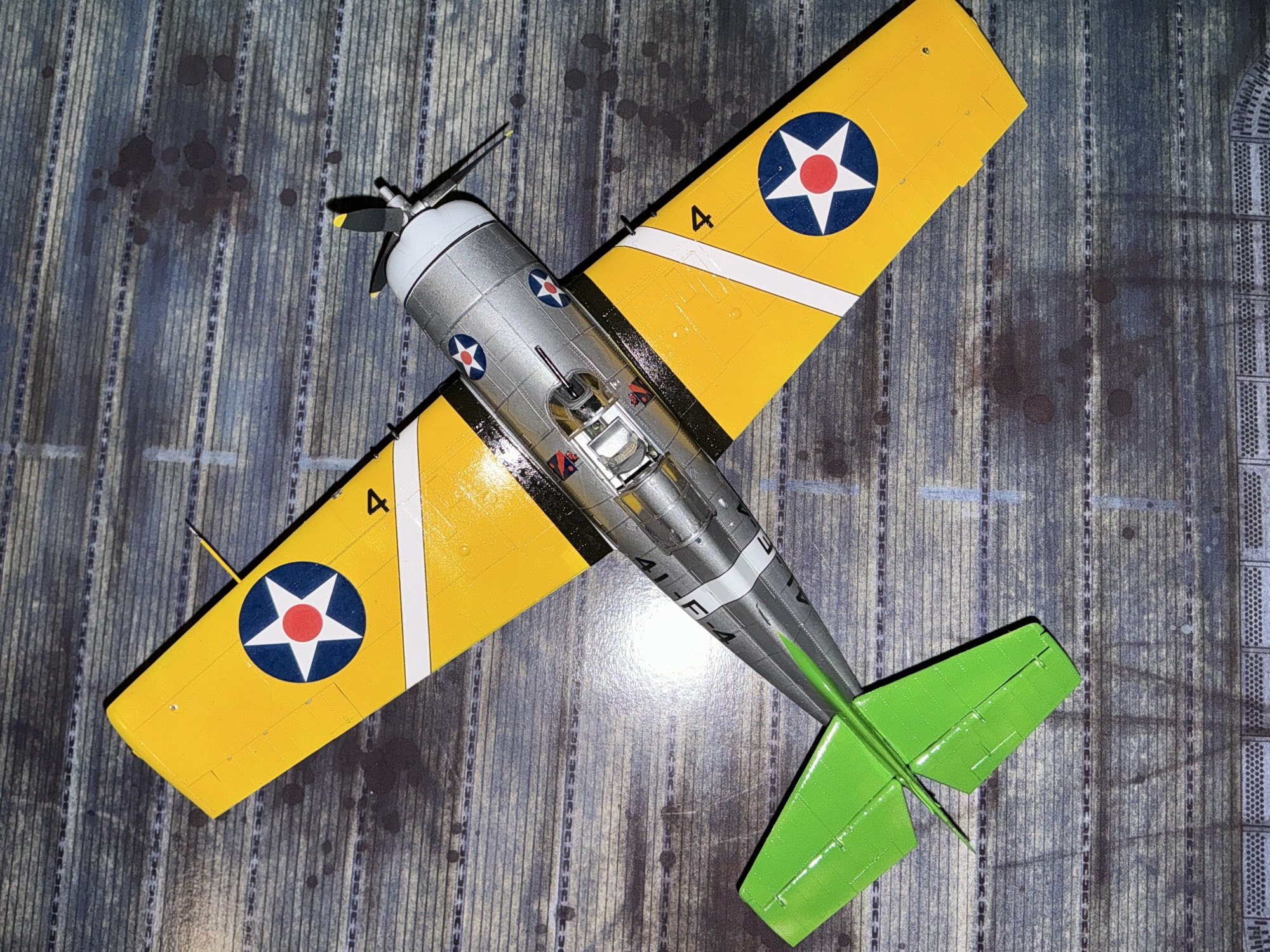
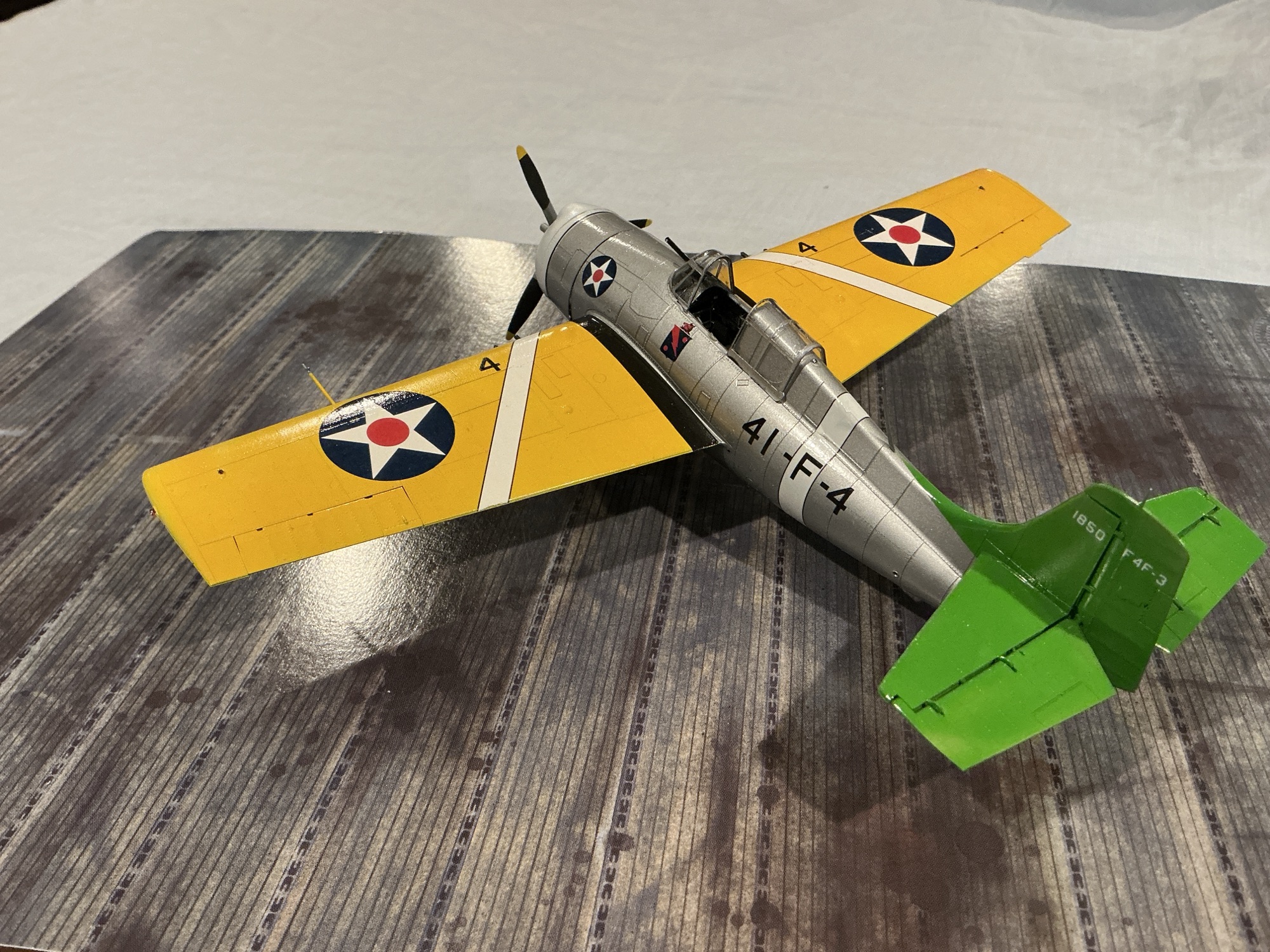
The first 49 examples of the new Wildcat were delivered in the Yellow Wings markings. This would be quickly superseded by the new overall grey scheme, but the first two full squadrons to re-equip with Wildcats wore the Yellow Wings, if only briefly. These would be VF-41 on the USS Ranger (Green Tail) and VF-71 on the Wasp (Black Tail). Both of these were the Atlantic Fleet carriers, convenient with Grumman being a New York company.
A brief aside, the Atlantic Fleet carriers operated slightly different air groups from the more familiar Pacific Fleet structure. Ranger and Wasp each had two fighter squadrons (VF-41 and VF-42 on the Ranger) and two scouting squadrons (flying Dauntless during the War). No Torpedo Bombers, until a small detachment was added after Pearl Harbor. But *I believe* only a single Avenger (for the Air Group Commander) was aboard Ranger through Operation Torch. More reorganization followed and in 1943 a more complete looking air group was employed.
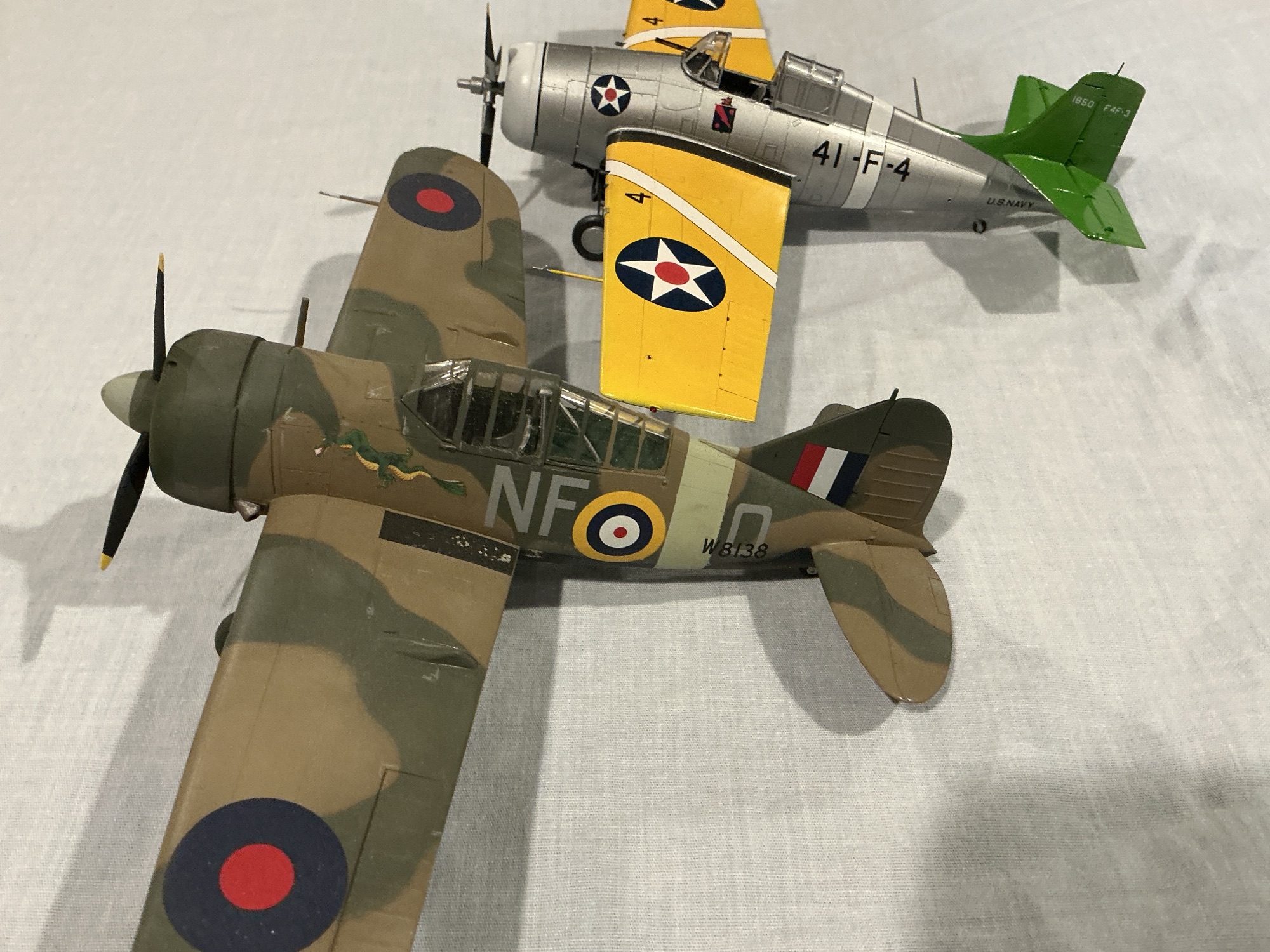
I should mention that the Royal Navy was actually the first to use the Wildcat, taking deliveries from a French order. The French had ordered 81 Wildcats as “G-36A”. This used the simpler and lighter Wright R-1820 engine, while USN types would all use the more capable (but also more complex and more expensive) Pratt and Whitney R-1830. After the fall of France, Britain took over the order as Martlet Mk I. And followed up with a Mk II built to their own needs. The Fleet Air Arm had found themselves in a difficult situation thanks in part to the RAF being responsible for their aircraft acquisition until just before the start of the War. No one in the RAF was overly worried about the needs of carrier aviation. So the RN started the War with Blackburn Roc and Gloster Sea Gladiator as their fighter types. The Fairey Fulmar was coming, but Wildcats could come available sooner. And in time, it would become clear the Wildcat was better at actual air to air fighting.
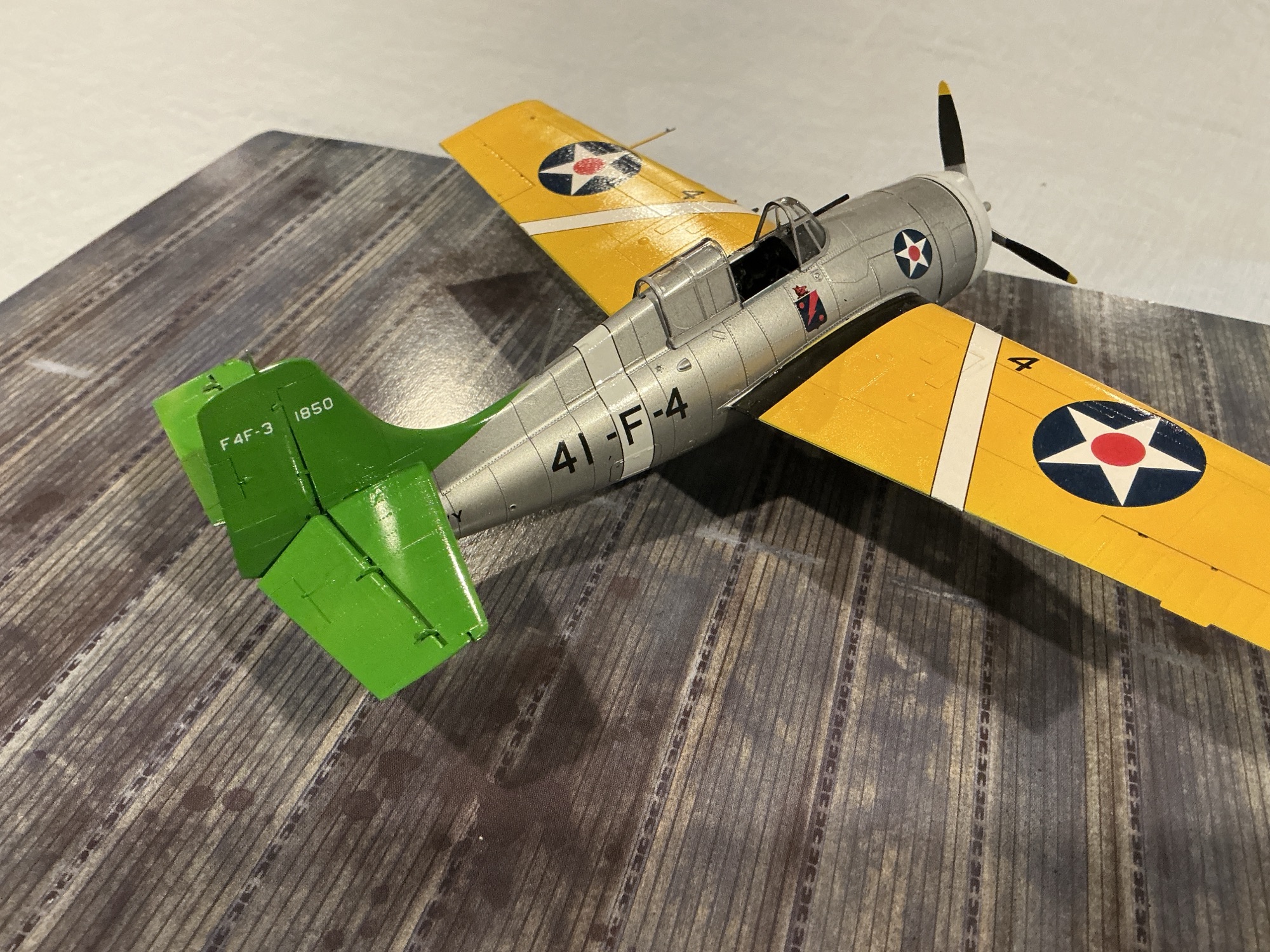
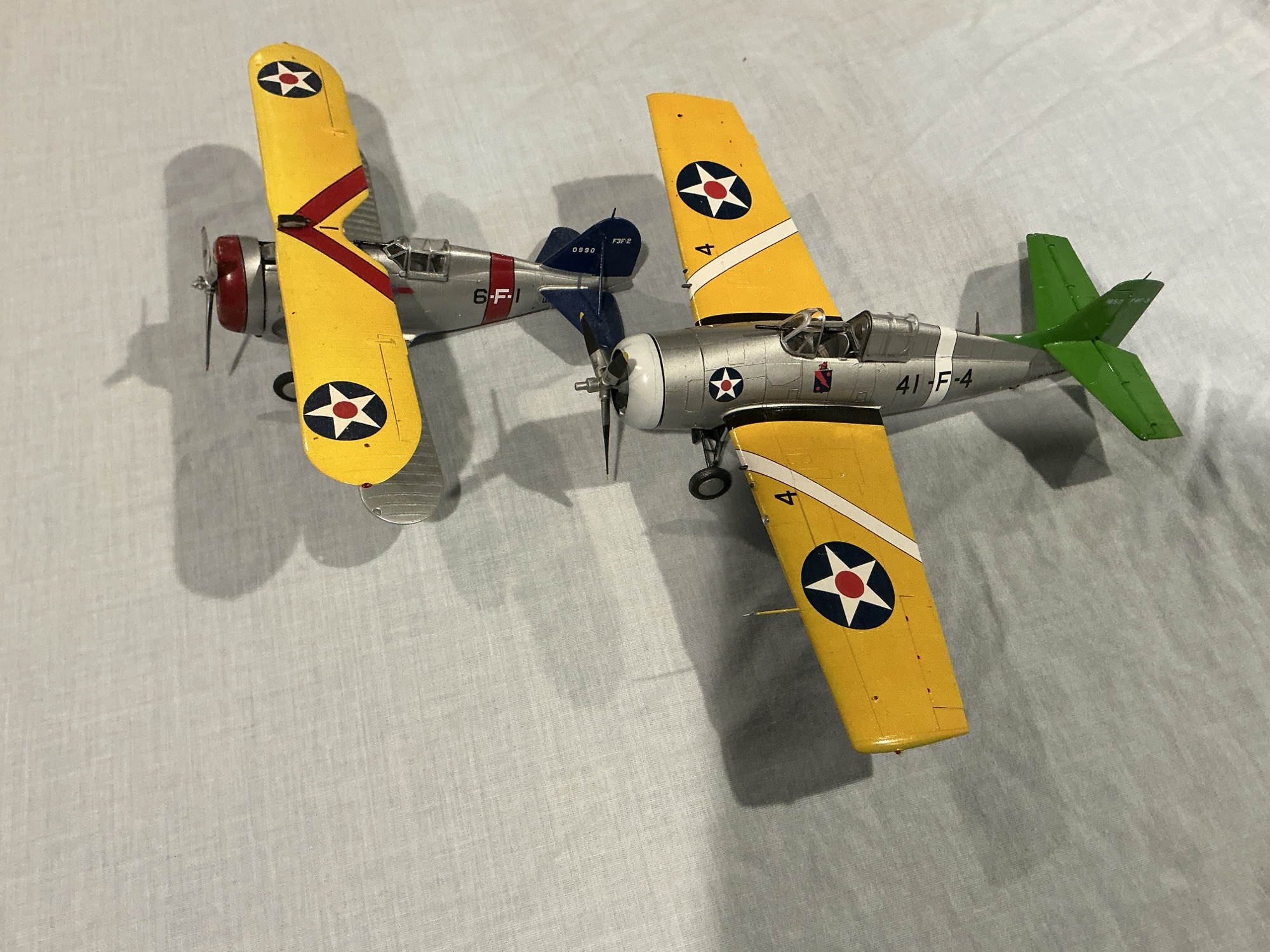
In USN service, the Wildcat filled out all carrier fighter squadrons by the time of the Pearl Harbor attack (except VF-2 on the Lexington still equipped with Buffalo). The Marines flew a mix of Wildcats and Buffalos. A few changes were made to F4F-3 Wildcats in the year and a half of service before the War. The most obvious, visible here, is the telescopic gun sight was replaced by a newer reflector style sight. Two more important deficiencies were noted, the F4F-3 did not have pilot armor or self-sealing fuel tanks. Both of these were corrected on the line, that is, later build F4F-3 would have these features. But in the weeks running up to War, pilot armor was often improvised at local depots (or on board ships!) from boiler plate. Grumman made a self sealing tank retrofit (a new gas tank made of an aluminum/rubber/aluminum sandwich, but with a loss in total capacity). I don’t know how completely either of these improvements were incorporated prior to combat. Updates were probably more broadly applied to fleet aircraft than Marine squadrons at remote outposts.
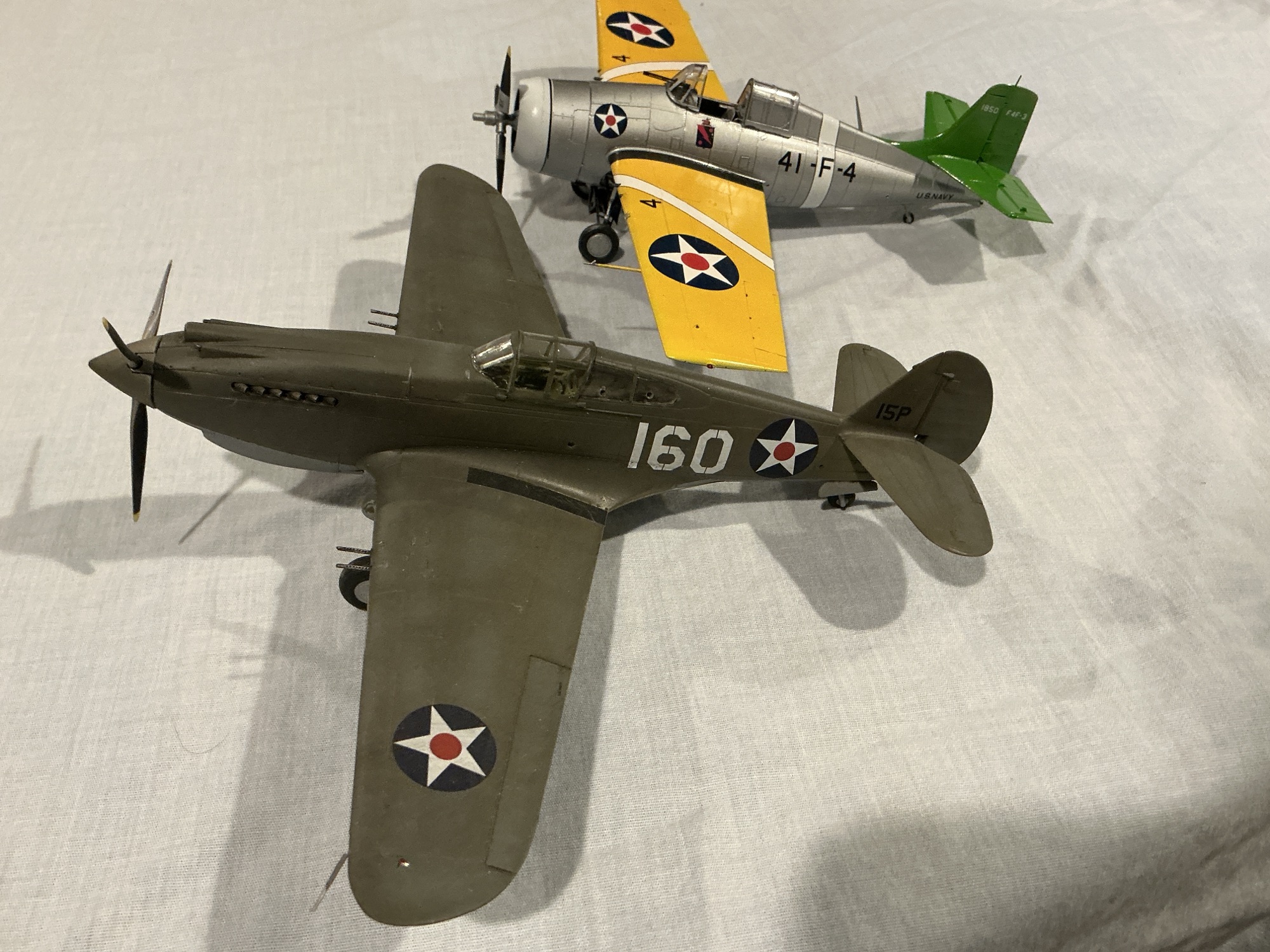
This particular aircraft was assigned to Lt Charles “Windy” Shields, who stayed with VF-41 through operation Torch more than two years later. There he scored at least two kills, a D.520 and a Hawk 75. He made ace in a Hellcat in the Pacific.
This is the new Eduard kit. It is spectacularly detailed with fine detail and fit. It did cause me some frustration getting things lined up (that I will try to hide in these photos…), but it is a good kit overall. I will do better with it in the future. Promise.


 Plane Dave