
Definitely a lesser known type!

Although many observers might quickly, correctly identify this as a modification of the A-20 Havoc/DB-7 Boston family of light attack planes. Let’s take a quick look.
Right from the US entry into World War II it was obvious some sort of radar equipped night fighter was needed. The British had put an airborne radar up in the early Blenheim Mk If, then a more successful type with the Beaufighter NF Mk I.

The first serious attempt at something for the USAAF involved a fairly sophisticated radar put in an airframe by Northrup, what was ordered as the P-61 Black Widow. But notice the word “sophisticated”! Something would be needed much more quickly. British Air Intercept Radar Mk IV was offered for licensed production in the US. A stopgap was conceived, really only considered for training. The A-20 series of attack planes was fast for its type, and had good load and range. The radar was mounted in the nose, and a pan was mounted under the belly for four 20 mm cannon. 98 A-20, A-20C and A-20G were converted to this new spec as P-70A and P-70B.
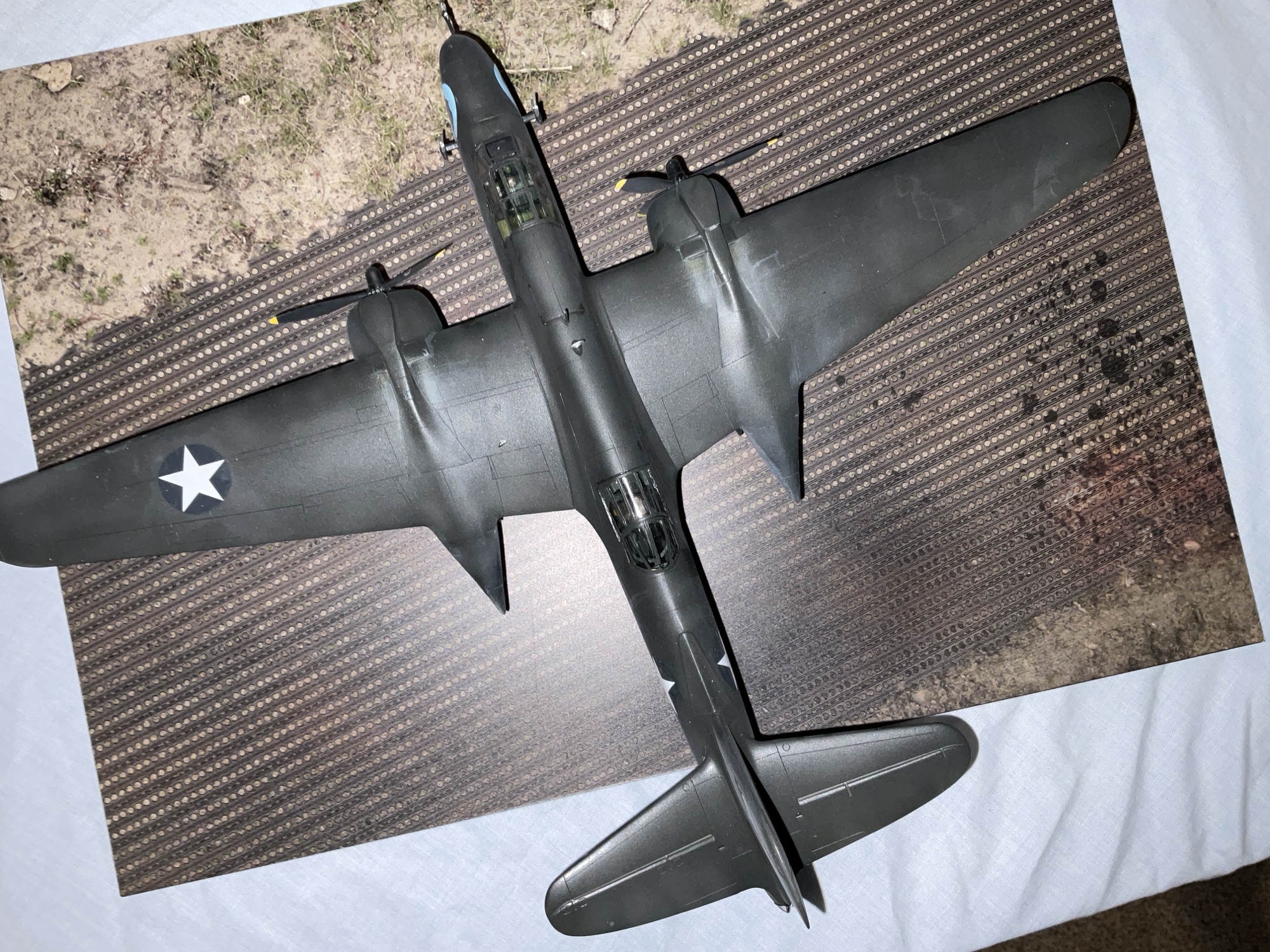
The 81st Fighter Squadron started Night Fighter training in August 1942 with 20 P-70s, 3 DB-7s and one B-18. This would form the core of the US Night fighter force. It is worth mentioning that other things were going on at the same time. US aircrew in England, and later the Mediterranean, were also training as Night Fighters in reverse lend leased Night Havocs and Beaufighters.
Meanwhile the USN was actually ahead in some aspects with a night fighter force training in PV-1 Venturas. Although the USN would ultimately head in a different direction, with smaller radar systems on single engine fighters like Corsair and Hellcat. While the USAAF worked on the bigger and more capable P-61.
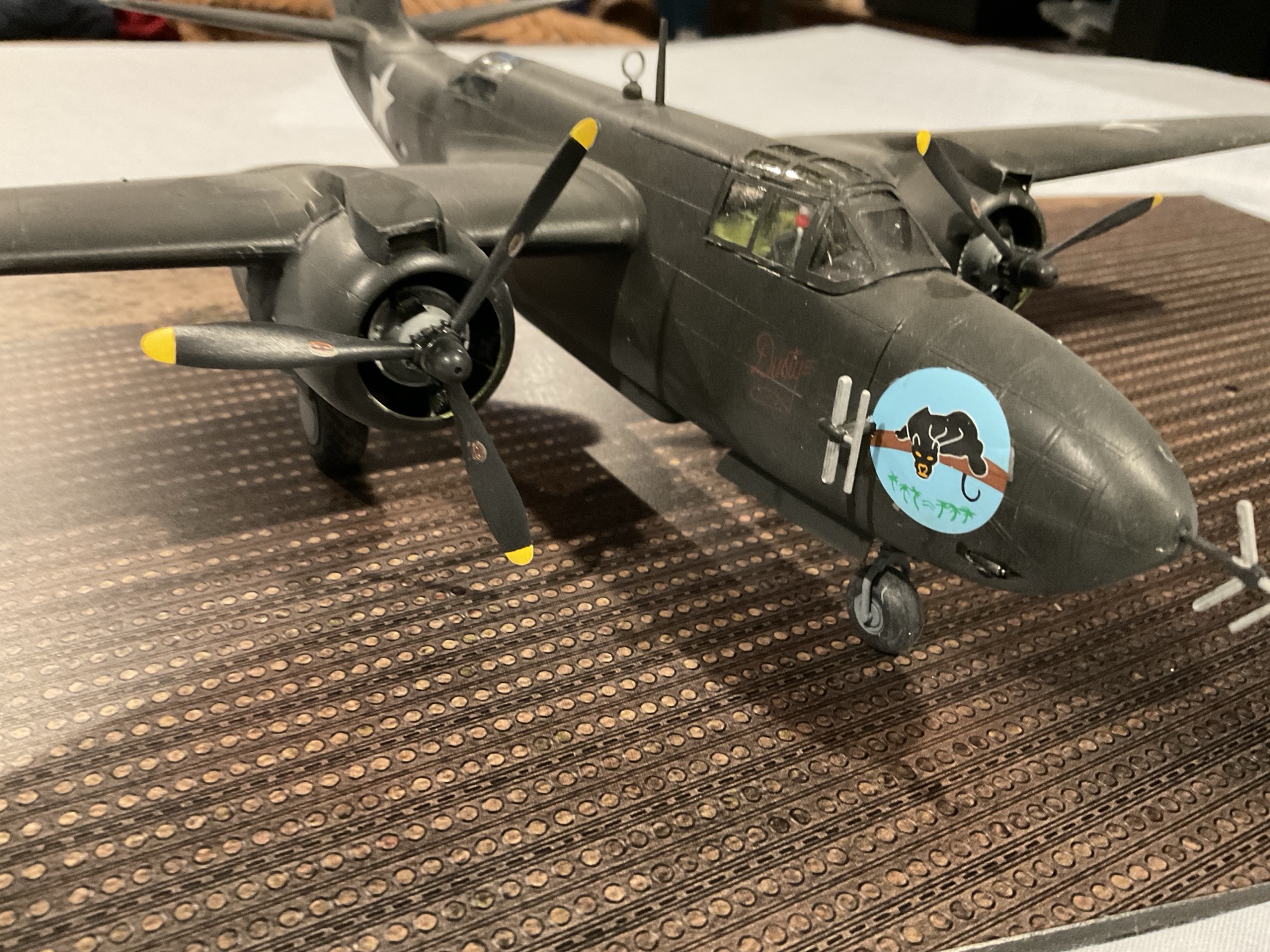
All through 1942 requests were coming from various Pacific commands, especially Hawaii, for something that could chase off nighttime Japanese nuisance raiders. So a decision was made pretty early to send 25 of the newly converted P-70As to the 6th Night Fighter Squadron in Hawaii. The 6th NFS had been flying single engine fighters on night patrols, so adding radar systems and radar operators was very much learning on the job. A smaller detachment was sent to Panama. These might be better considered service test aircraft as opposed to operational night fighters.
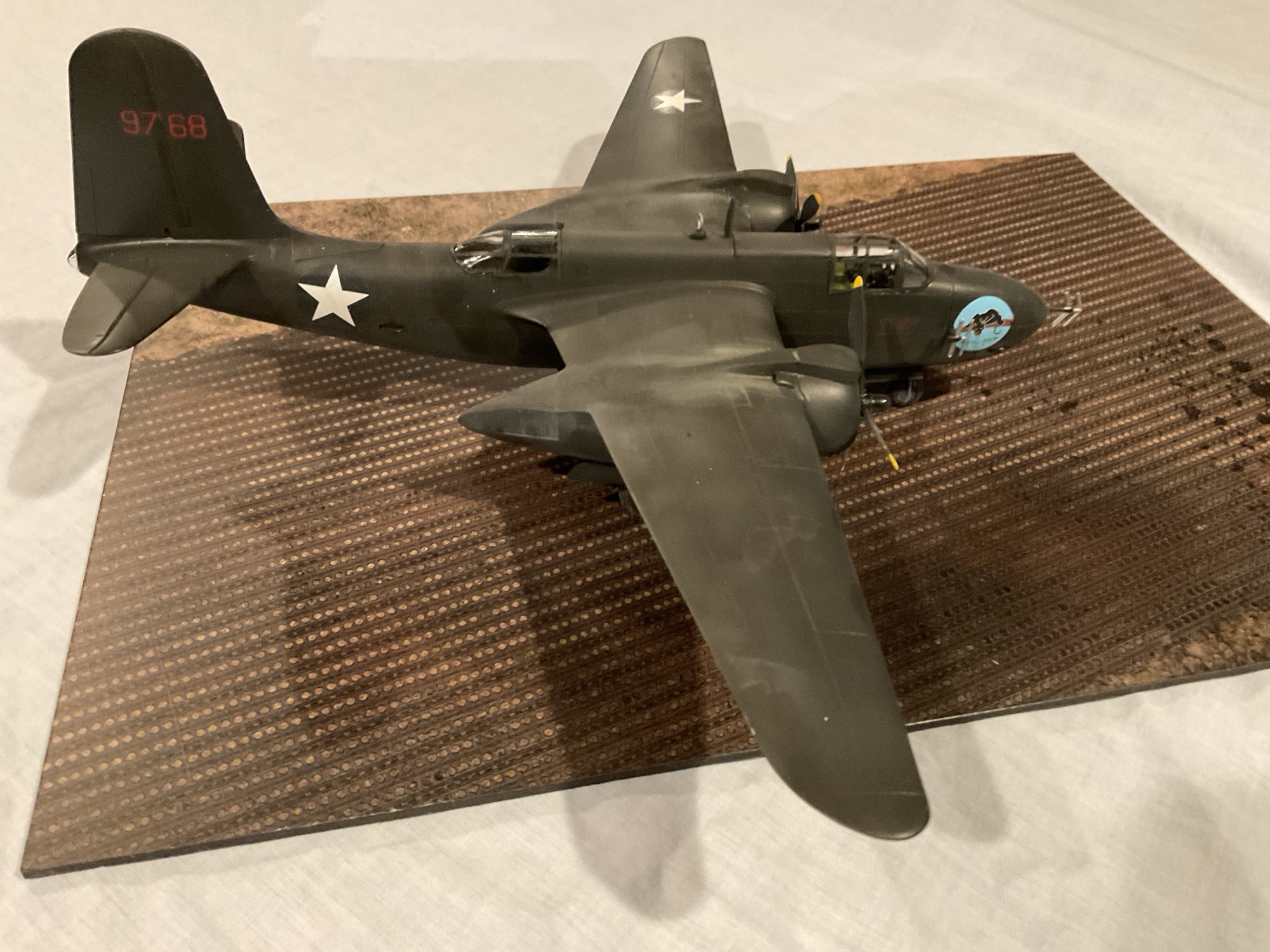
The Japanese had been very aggressive with night operations in the South Pacific. So the 6th NFS was ordered to send two detachments, one for operations from Guadalcanal and the other at Port Moresby. When this was done, it quickly became obvious the P-70 was simply way too slow to catch anything. Even if it was as fast as most bombers, it was only barely so and there was no opportunity for chasing anything down. The detachment on Guadalcanal even acquired a couple Marine PV-1 for help, but these were only barely any faster. An attempt was made to put a radar in a P-38 Lightning, this proved awkward at best. Borrowing the occasional single seat, non-radar equipped P-38 proved to be their best response. But obviously this was not ever considered a long term solution.

All of 1942 and 1943 could be considered formative years for the US Night Fighter force. Technology, weapons, tactics and procedures were being hashed out. In 1944 US trained, P-61 Black Widow equipped squadrons began entering combat which might be considered a coming of age for the force. At that point they started to become much more effective. Although its worth mentioning, the USAAF never had a real high speed night interceptor during the War. The Black Widow maxed out at around 380 mph, it could not catch certain high speed intruders. It was a source of some embarrassment that Marine Squadrons with Hellcat night fighters were often called in to handle such speedy foes. Although could be balanced some by the fact the Black Widow had more sophisticated systems and could better work as a night intruder. In Europe, the solution was the US night fighter squadrons operating a number of Mosquitos.
Immediately post-War, the much faster P-61C, and radar equipped P-38M came available.

This aircraft was flown by a 6th NFS detachment operating from Port Moresby in 1943. It is the old AMT kit. It is not a hard build, but it simplifies a lot both for simplicity and commonality with that company’s range of A-20 models.
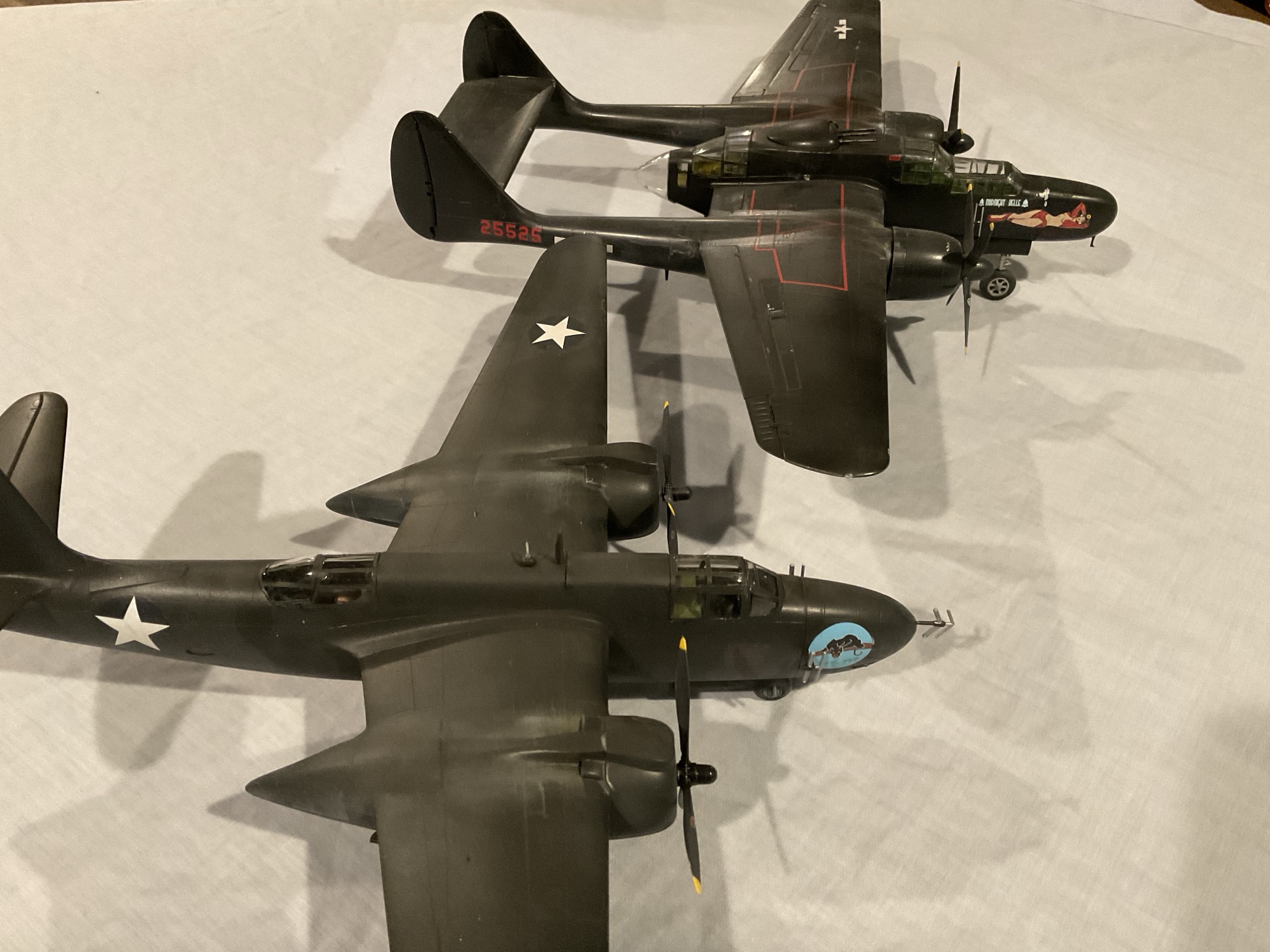
The airplane that finally gave the USAAF a modern and capable night fighting force was the P-61 Black Widow.


 Plane Dave